
Technology promises independence.
For those of us living on the road, that promise matters. Our motorhome electrical system was built around that idea: solar on the roof, lithium storage, shore power when available, gas when it isn’t. Layers of resilience that mean we can live comfortably without worrying too much about where the next socket might be.
It gives you a certain confidence. Not arrogance. Capability. Until the moment it doesn’t.
The moment
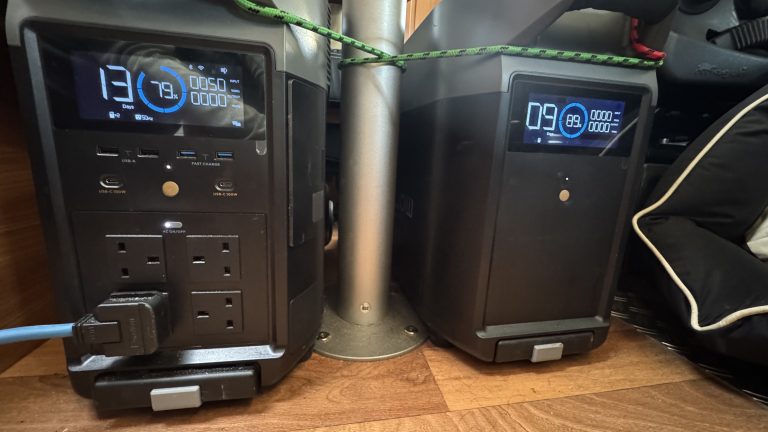
The campsite electricity dropped out. Nothing unusual. It happens. Our auxiliary power station stepped in exactly as it was designed to do, seamlessly taking over the load. When the supply returned, the unit slipped back into pass-through mode and quietly began charging again.
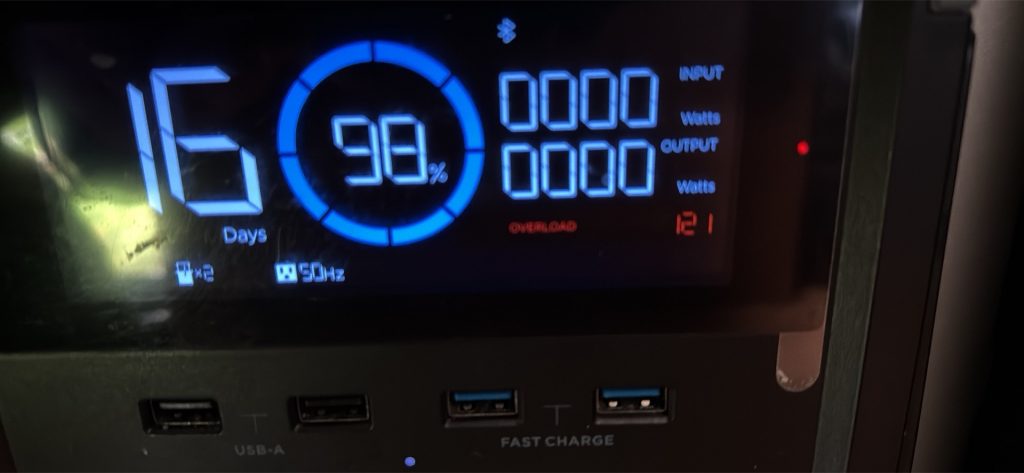
Then the shore power failed a second time. This time the display showed something different: Overload – 12V. The load on the system was modest — well under a kilowatt. Nothing that should have troubled it.
I tried restarting it. No change. Five minutes later I attempted the hard reset recommended by the manufacturer. Hold the button down for twelve seconds.
At around second eight the smoke started. Not dramatic flames, just the unmistakable smell and curl of burning electronics. This was the start of an electrical fire. I shut the unit down – immediately.
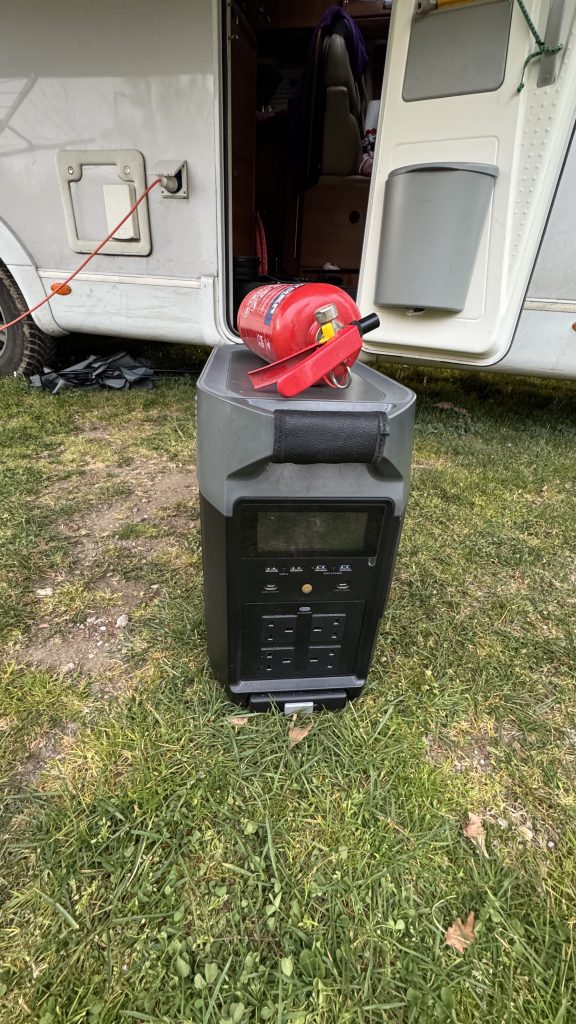
When electrical equipment fails inside the small space that is also your home, the mind runs ahead very quickly. Motorhome. Gas cylinders. Batteries. Wood and fabric everywhere.
You do the calculation instinctively. How bad could this have become? For a few minutes afterwards neither of us said very much.
The aftermath
The unit now sits where it always did — in the living area of the motorhome. Except it is no longer part of the system. The power button is taped over so it cannot be accidentally pressed. It is, as far as I can make it, disabled. But it is still what it always was: a very large lithium battery – and still fully charged.
One that has already shown a willingness to misbehave. Three thousand miles from the shop where I bought it. That distance changes everything.
The search for help
The first instinct is simple: call support. That’s when the strange modern maze begins. Manufacturer support points to the retailer. Retailer support points back to the manufacturer. Chat windows open and close. Promises of call-backs appear and then quietly dissolve into silence.
Two separate chat sessions produced assurances that transcripts would be emailed. They never were. Fortunately I had taken screenshots.
The most surreal moment came about forty minutes into one conversation:
“I’m sorry, we can only help with online purchases. If you bought the unit in store, you’ll need to speak to the shop.”
Forty minutes into the call. There is something extraordinary about the invisible barriers that large organisations construct around themselves. Perfectly logical inside a corporate process. Utterly baffling when you are sitting beside a damaged lithium battery in a motorhome in North Macedonia.
The real problem
The questions I needed answered were straightforward. How do I dispose of a damaged lithium unit safely? Where can that be done anywhere near here? Can a replacement realistically be shipped to this part of the world? And if not, where on our route might one be delivered?
Those are practical questions when you are travelling long term. Instead, hours disappear. You explain the situation again. And again. You wait for the promised call-back. It doesn’t come.
You explain it again to someone new tomorrow. If you can get a signal and not being hit by huge roaming fees.
The arghh effect
What begins as a technical problem slowly becomes something else.
It occupies space in your head. You talk about it while making coffee. You talk about it while walking the dog. You talk about it over dinner. Not because you want to, but because the problem hasn’t gone away.
There’s a particular kind of frustration that builds when time is being consumed without progress. I call it the arghh effect. Not rage. Just a steady accumulation of irritation.
Time spent chasing answers. Time spent thinking about risk. Time spent working through alternatives. Time you hadn’t planned to spend at all.
The re-calibration
In truth, the trip itself is not under threat. Our system was designed with layers. Gas still works. Solar still works. Shore power works when campsites provide it.
What we have lost is something subtler. Energy independence. The ability to run everything without thinking too much about it.
For a while it felt like a small superpower. Now we are simply back to being ordinary travellers again. Which, in the grand scheme of things, is perfectly manageable.
Perspective
The faulty unit is still here, taped shut and waiting for someone, somewhere, to tell me how to deal with it properly. The emails continue. The waiting continues.
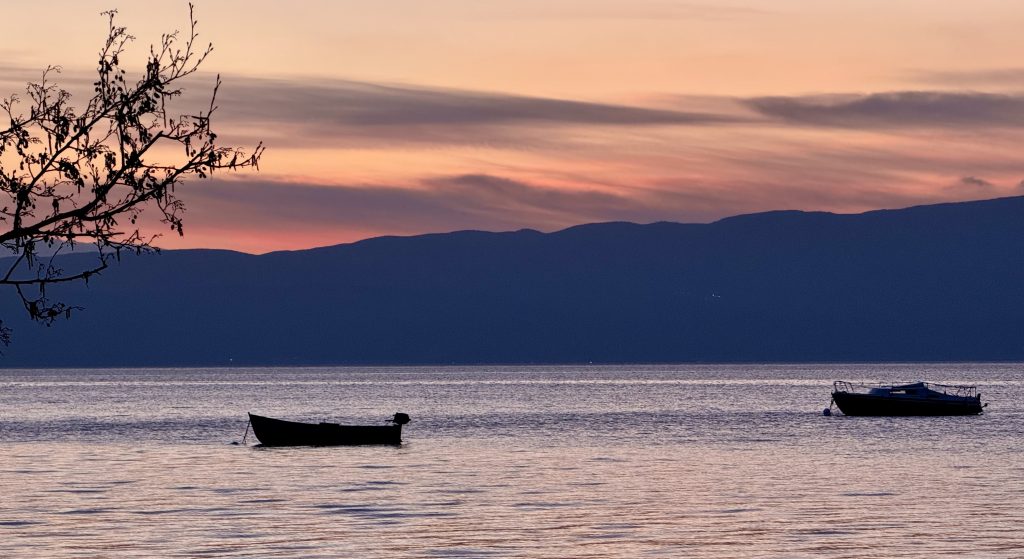
The lake outside is more than a million years old. Civilisations have come and gone on its shores. Empires have risen, fractured, and vanished. Churches have been built, abandoned, and rebuilt again.
Against that backdrop, a failed battery and a few hours lost to helplines begin to shrink back into proportion. Tomorrow morning the coffee machine will still dispense calm before the day commences, providing that we have site electrics. And it will— and the lake will still be there, quietly reminding us how small most of our crises really are.