

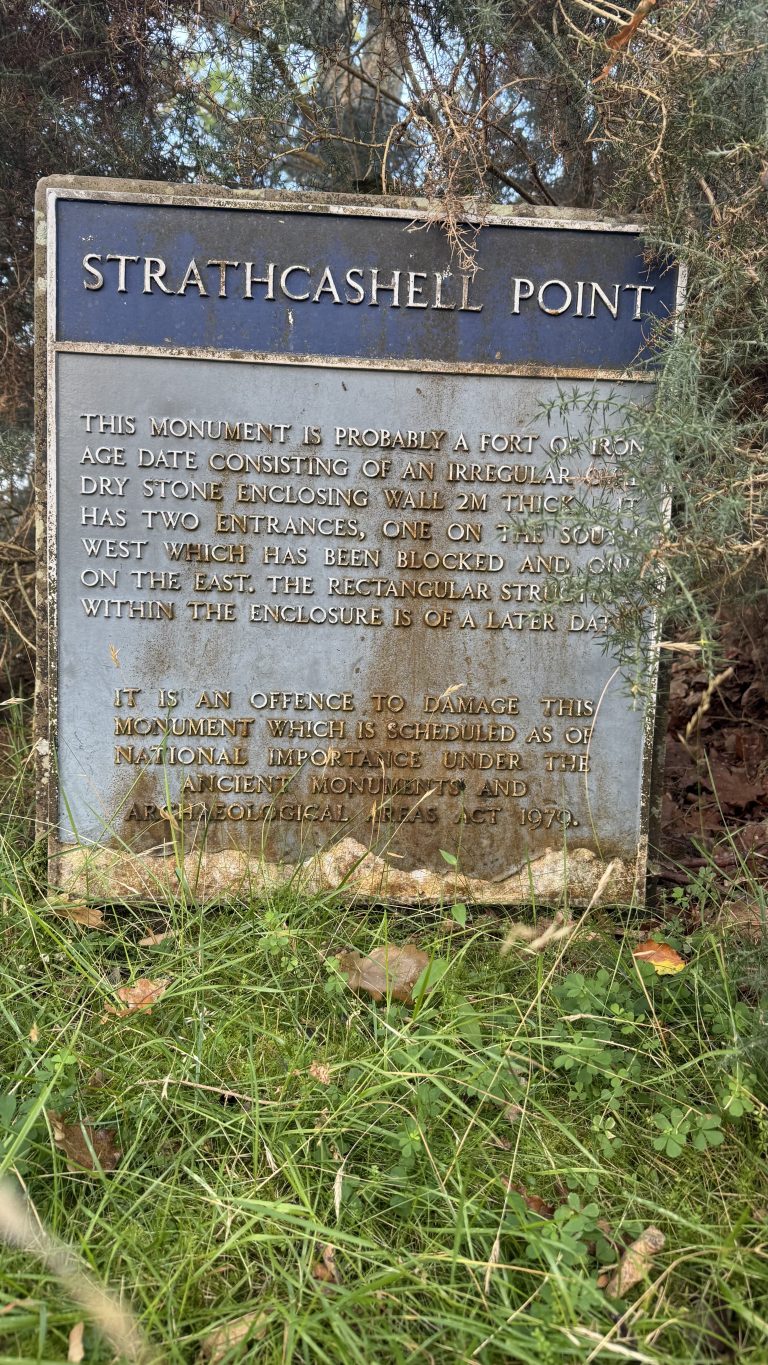
If it wasn’t for the small plaque fixed on the site, you’d be forgiven for walking straight past. The Iron Age fort here is hardly a fort at all anymore — no towering walls, no ditches, no clear outline. Just ground that looks like any other patch of hillside.
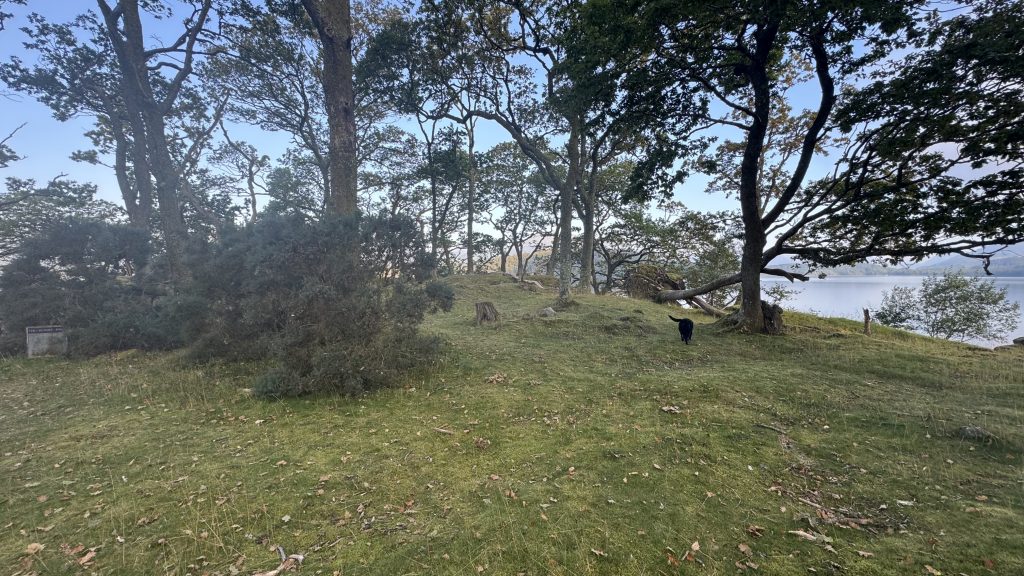
And yet, this was once a defended settlement. People lived here, worked here, and at some point, felt the need to guard it. It’s a reminder that history doesn’t always survive in neat ruins with ticket offices and gift shops. Sometimes it’s just a trace, an echo you must squint a little to see.
Imagining the past
For a few dreamy moments, I let myself step back 1,500 years. With the help of AI the Iron Age settlement and in particular one woman, name unknown, came to life. Here is a snippet of what research has suggested as daily life in those times.
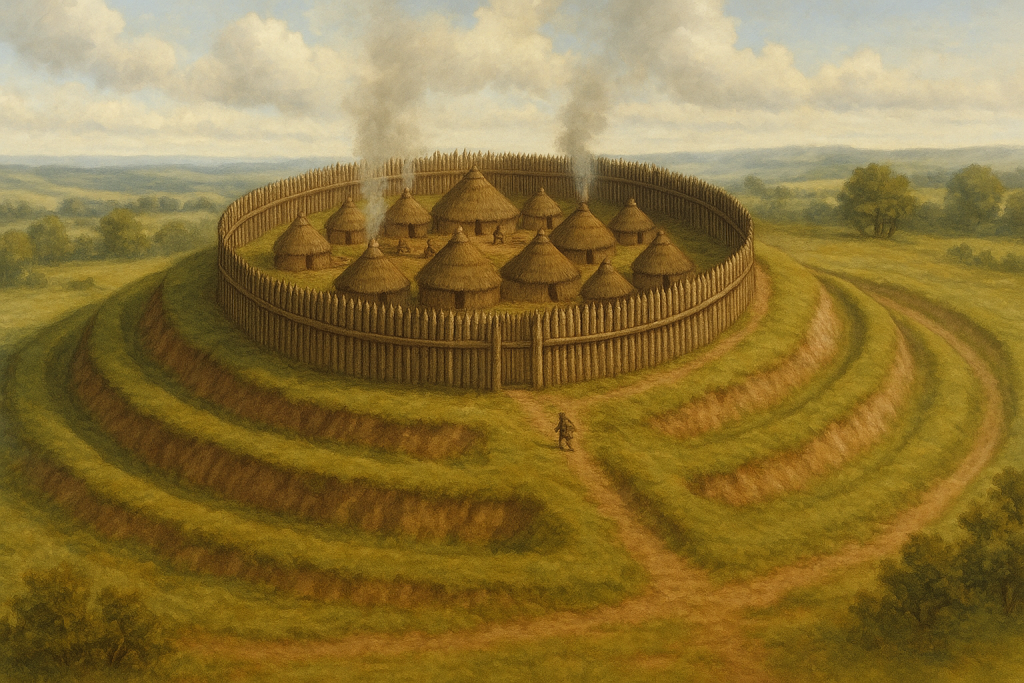
The hollow in the ground fills with huts of timber and turf, smoke curling into the morning air. There’s the smell of peat fire and damp wool, the sharp tang of animals close by. I can hear the lowing of cattle, the shuffle of feet, a child’s shout carried by the wind. People are already at work — tending fires, mending tools, watching the treeline. The fort isn’t silent or forgotten; it’s alive, purposeful, and full of voices that the hillside has long since swallowed.
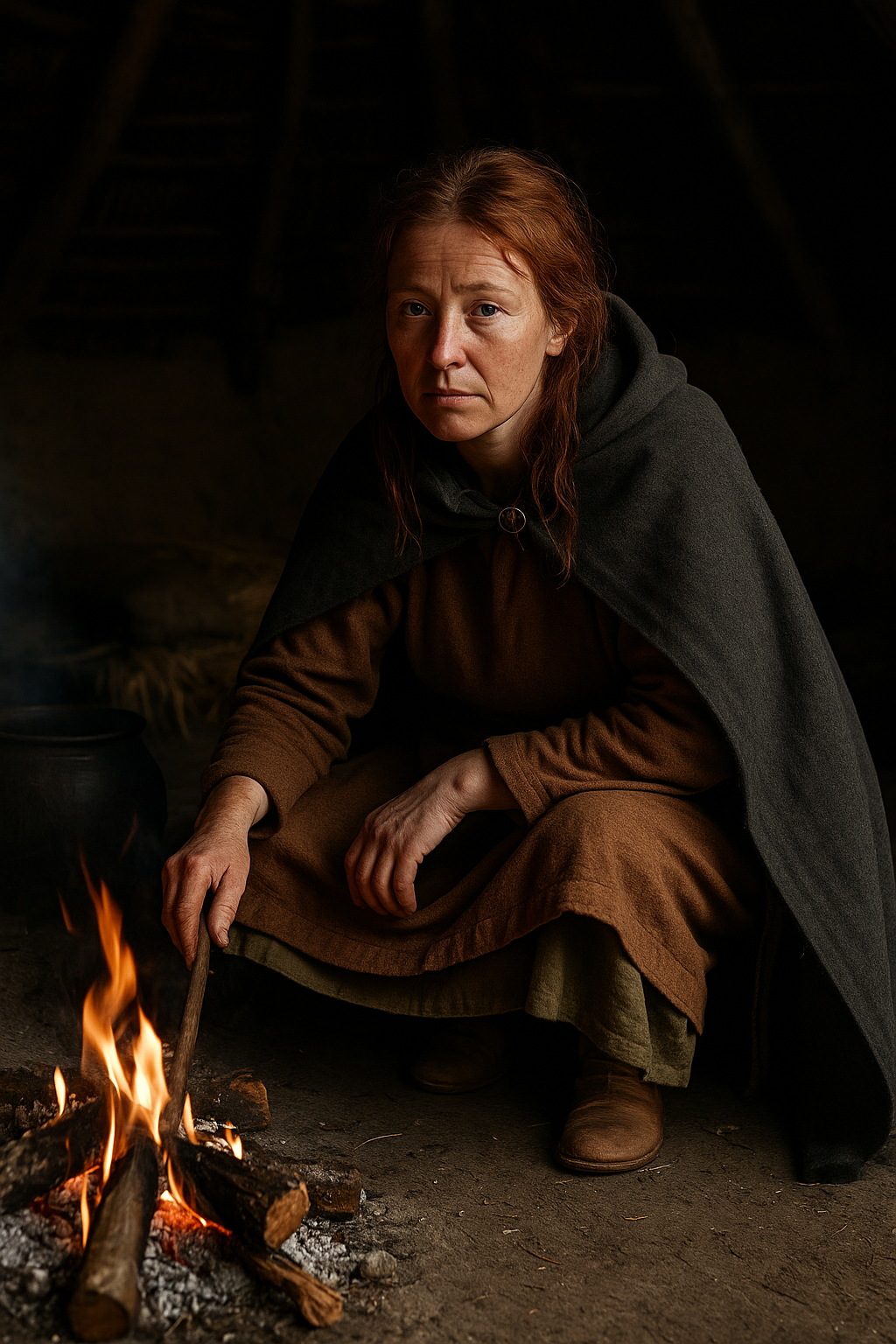
The day begins with smoke. A woman bends over the hearth in a roundhouse, coaxing last night’s embers back to life. The smell of damp thatch mixes with peat and the faint tang of yesterday’s stew. Children stir on straw bedding, tugging at woollen cloaks for warmth.
Outside, the first sounds of cattle drift in. A man drives them out through the gateway, his breath clouding in the cool air. The ground is already wet, the clay sucking at his feet. He carries a spear, not for hunting today but for the hint of trouble that always rides the edges of their world.
Up on the rampart, a boy lingers, watching the valley. He sees the same hills we see, but the world looks different through his eyes: alive with spirits, gods, and the weight of kin who depend on the strength of these earthworks and the fire behind them.
The story is obviously fiction, but it shows how life would have been. It also illustrates how easy it is to miss what once mattered. That, in a way, is the story — the contrast between the ordinary landscape and the extraordinary lives once lived upon it.
On How This Article Was Made
This piece is part of our ongoing experiment in collaboration between me and ChatGPT. The words began in my head and voice; the structure and draft were shaped in partnership with ChatGPT’s machine intelligence. The images were generated by the same process — my prompts and framing, the machine’s rendering. Together, we’re trying to see how sentient experience and system logic can make something more than either could manage alone.