

One month in feels like a good time to take stock. The romance of the road is one thing, but it’s the systems and the technology that make the difference between a dream and a headache. Some of what we brought has been indispensable, some hasn’t yet earned its keep, and a few things have tested us.
What’s working well
- Power management:
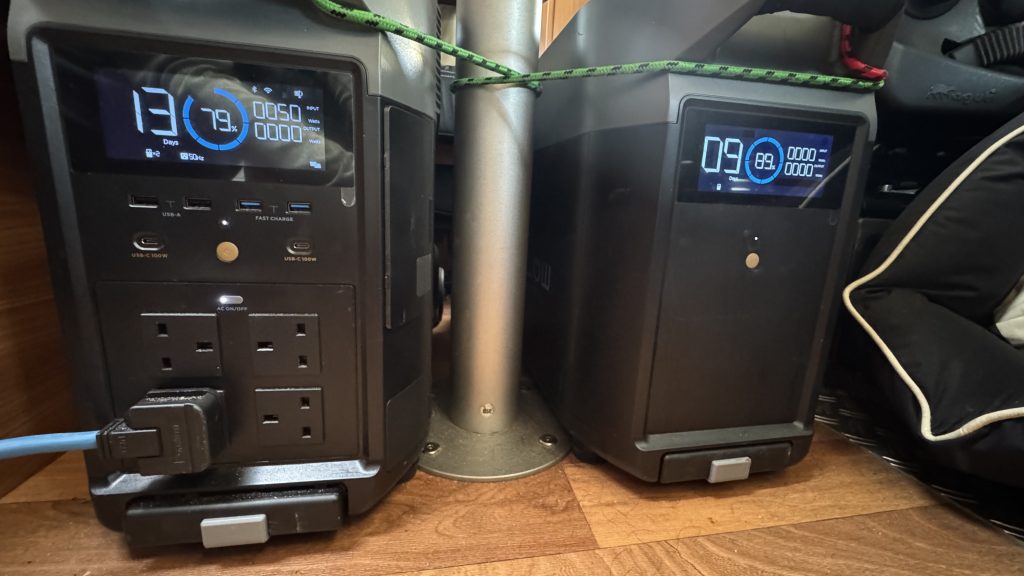
The EcoFlow power stations and solar panels providing 240v AC electricity have been rock-solid. Daily checks show us where we stand, and we’ve learned quickly how to balance driving, solar, and shore power.
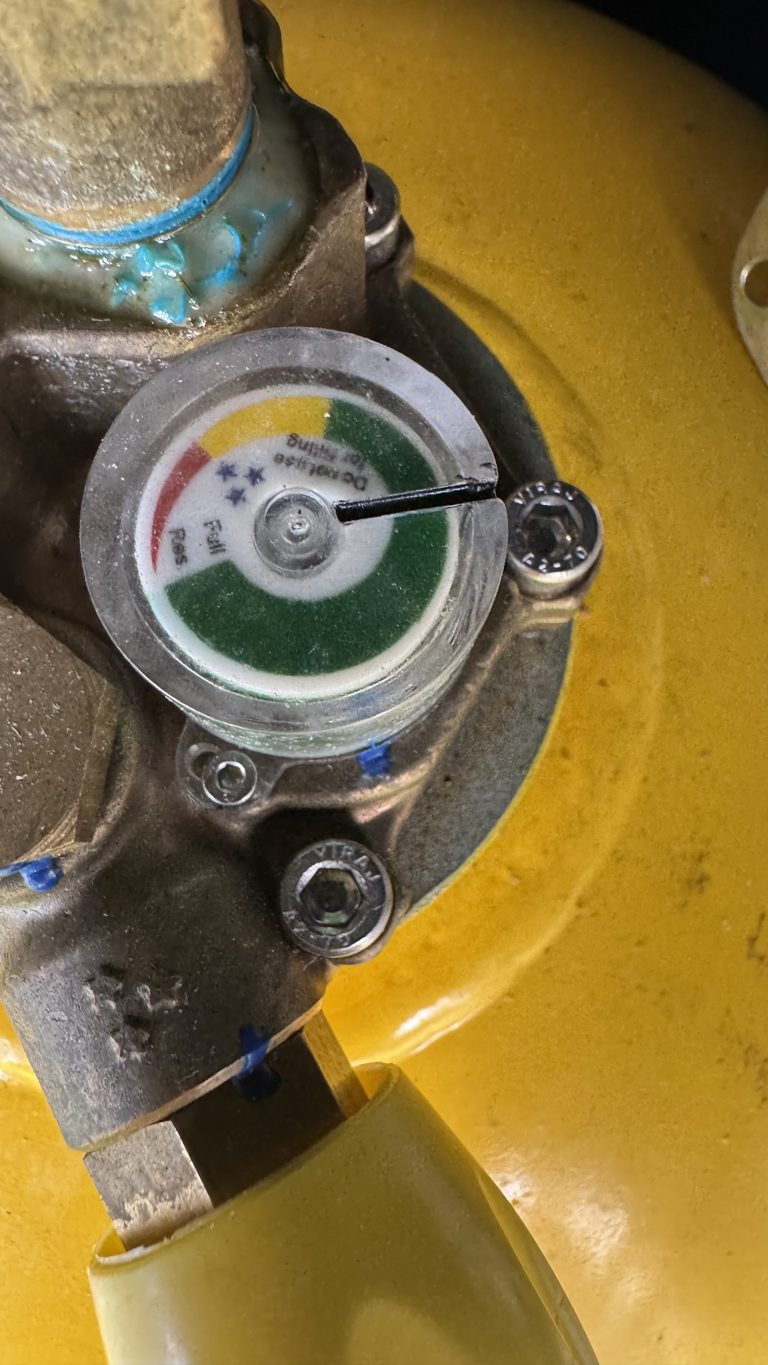
The Titan lithium phosphate leisure battery and dedicated solar panel provide 12v electricity for essential systems such as the water pumps, corridor lighting and low-voltage appliances. Over-powered by design, it stayed above 80% with normal usage. - Gas: Two Gaslow cylinders with auto changeover — simple, reassuring, no mid-meal panics. Less than a quarter of our supply used so far.
- Water: The inline UV filter gives us confidence, whether filling at a site or a less familiar tap. It’s invisible but vital.
- Connectivity: Wi-Fi antenna and router — not perfect, but far better than relying on patchy mobile signal. Blogging and route planning would be harder without it. The satellite system has worked solidly.
- Laundry kit:The combination of Scrubba wash bag and spin-dryer work exceptionally well. We can tell the difference in performance between our technical clothing and other garments – the time they take to dry is measured in minutes not hours, where the other garments take three times as long.
What we thought we’d use more
- Microwave: Handy in theory, but in practice the hob and induction plate get almost all the work. It doesn’t feel like ballast because I have batch cooked some dishes that are still in the freezer compartment; we are currently living off freshly purchased local produce, with no need to reheat chilled food.
- Entertainment kit: The 12V TV is rarely switched on. Books and laptops win.
Challenges and problems
- Water pump hiccups: Airlocks have slowed us down. We’ve learned to spot the signs early, but it’s a system we’ll keep watching. I cannot locate the water pump. Without that, I can’t check for blockages.
- Fuel vs. water tank mishap: Not a system failure, but a user failure. £500 lighter, lesson firmly learned. From a systems perspective though, it is possible to contaminate fuel with water and vice versa, we need to be especially careful in future to avoid replicating costly, if not catastrophic, human error.
Kit that stands out
- Resistance bands : Space-friendly fitness. We’ve not started with our yoga or tai chi exercises yet, but the bands are becoming part of the rhythm.
- Collapz pipes: For grey water. Simple and effective.
- Coffee machine: Might not seem essential, but it anchors our mornings. Oat latte = home.
What we’re still figuring out
- Connectivity – and implications for when we are abroad: UK SIMs won’t cut it in Europe long-term. We’ll need to trial eSIMs or local cards once we cross the Channel.
- AI as a system: Planning, logging, reminding, troubleshooting. It’s not hardware, but it’s already woven into how we run the van. Half utility, half experiment.
Lessons from month one
- Systems need daily rituals, but they don’t need to rule the day.
- Redundancy matters — two ways to power, two ways to cook, two ways to stay secure.
- Some kit proves its worth in five minutes; some proves it’s pointless just as quickly.
Nomad life isn’t just places and views — it’s keeping the van humming, the lights on, the water flowing, and the dog fed. Get the systems right, and the rest can fall into place.