

Learning the aire way
When we planned our setup, we didn’t design it around French aires. We simply didn’t know what to expect. Now that we’re here, it’s clear that this style of travel quietly rewards how we think and live.
Aires — aires de camping-car — are simple by design. There are no serviced pitches. Water is never at the pitch. Electricity, when available, is usually limited; six amps is common. That single constraint shapes everything. You’re not plugging into abundance, you’re working within limits. That isn’t a criticism. The aire concept is superb, and it’s something the UK sorely lacks.
Six amps and paying attention
Six amps is enough, but only if you pay attention. High-draw appliances, or several lower-draw ones running together, demand respect. It doesn’t feel restrictive so much as clarifying. You become more aware of what you’re using and why. Electricity stops being background noise and becomes something you actively manage.
Back to basics
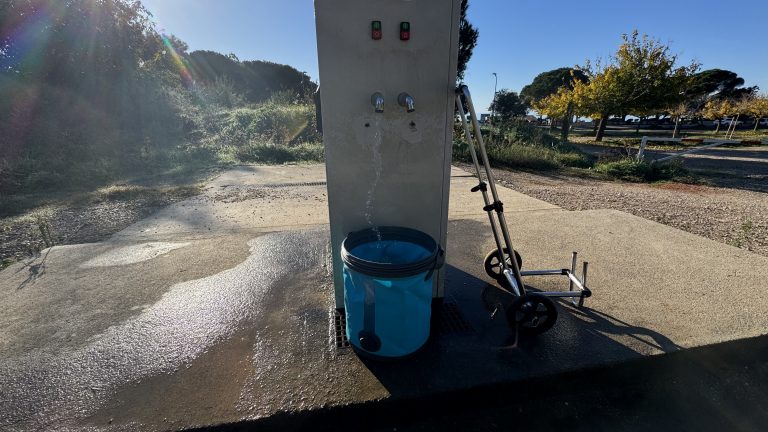
The lack of serviced pitches has pushed us back to basics in a way that feels unexpectedly satisfying. Hoses lose their importance. Buckets matter again. You fetch water, carry it, and use it deliberately. It’s slower, yes, but also grounding. There’s a rhythm to it that suits aire living far better than we expected.
Choosing kit that fits
Our setup fits this environment well. We’ve prioritised flexibility over brute force, and redundancy over convenience. Nothing flashy — just kit that does its job day after day. The most valuable items aren’t the cleverest ones; they’re the ones that reduce friction when conditions are basic.
Weight and footprint mattered when deciding what to bring. We usually carry a 40-litre Aquaroll and a Wastemaster, both hard plastic and bulky. Downsizing felt sensible, but also a little exposing. In the end, we chose smaller: a 20-litre collapsible bucket for fresh water and a compact capped tray for grey waste. The footprint dropped significantly, and the weight a little. We also packed two 15-metre flat hoses — so far, unused.
Adapting our electrical habits
Electricity has required the biggest adjustment. Six-amp supplies, often paired with very sensitive breakers, trip easily. We’ve stopped charging our EcoFlow power stations from shore power and now rely on alternator charging while driving.
We also choreograph appliance use carefully. Running two high-draw items together isn’t an option. Cooking takes thought — the microwave, Instant Pot, and electric skillet can’t be used at the same time.
What aire living teaches you
Living this way sharpens your relationship with your systems. Inefficiencies show up quickly. You learn which habits cost time or energy. And you adapt — not by adding more kit, but by thinking differently.
Aires don’t reward excess. They reward awareness. And they reinforce something we’ve come to value deeply: systems aren’t about comfort for its own sake. They exist to support a way of living that’s light, intentional, and resilient.