

A monthly field review of the systems that make life on the road work — or occasionally don’t.
February 2026
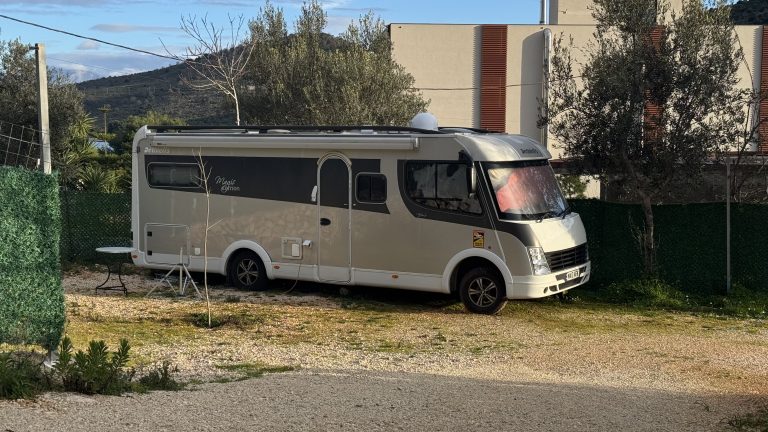
A month spent stationary in Albania shifted the motorhome from touring vehicle to base camp. February’s review explores the systems, technology, and small routines that quietly supported daily life when movement stopped.
Context — Base Camp Mode
February followed a completely different pattern from previous months. We stayed in one place for the entire period, shifting the motorhome from touring platform to something closer to a small, functioning home. This review therefore looks at the systems and technology we relied upon while operating in what might best be described as base camp mode.
When movement stops, priorities change. Navigation becomes irrelevant, reliability becomes assumed, and the systems that quietly support daily living move into sharper focus.
Systems
Power and Electrical
Being parked for the month gave the satellite navigation system a well-earned holiday. The site’s 10-amp, 230-volt electrical supply proved robust and dependable enough that the EcoFlow Delta Pro remained largely on the subs bench.
There was, however, one small but important exception. A violent overnight storm tripped the site’s power supply. Our auxiliary system immediately stepped in and carried the load exactly as intended. Moments like this justify the entire setup. Redundancy is not about daily use; it is about confidence when something unexpected happens.
Living Systems
Good site infrastructure changes daily routines significantly. Excellent laundry facilities meant no hand washing or improvised drying solutions were required. Our rotary dryer — perhaps the lowest-tech item we carry — worked flawlessly whenever the weather allowed.
The awning saw limited use, deployed only once, but that proved useful as an inspection and cleaning opportunity. Our pitch sat in something of a wind tunnel, so prudence quickly won and the awning was stowed again.
Sometimes the best system decision is knowing when not to use equipment.
Cooking — The Dominant System
Cooking became the primary operational system this month. Almost every piece of kitchen equipment we carry saw regular use.
The clear standout was the Instant Pot Duo Crisp. Its multiple functions reduced gas consumption while expanding what could realistically be cooked in a compact space. Pressure cooking and slow cooking were used most frequently, supported by sauté, roast, and air fry modes.
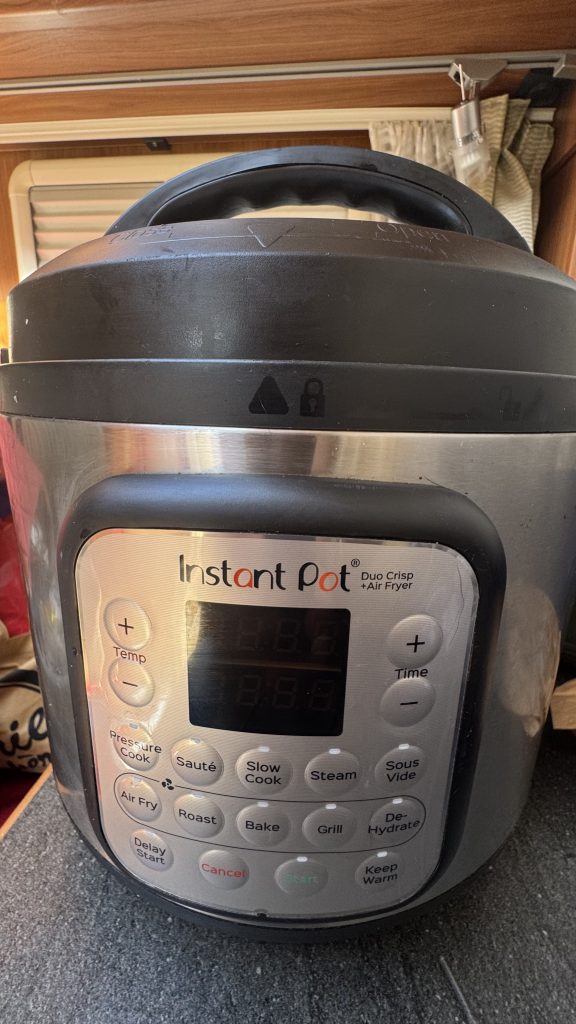
One unexpected success was the dehydrator function, used to turn beef offcuts into dog treats — effectively doggy biltong — proving again that versatility often matters more than specialisation.
Supporting tools earned their keep too: the stick blender, food chopper, and knife sharpener all became part of everyday workflow rather than occasional extras.
Connectivity
Connectivity continues to underpin modern travel.
A one-terabyte local data SIM comfortably lasted the entire month with no reliability issues. As we prepare to move countries again, the familiar task of establishing a new connectivity solution returns.
Pip’s Holafly eSIM expired toward the end of the month and was replaced — not without a fair amount of mither and troubleshooting, assisted along the way by ChatGPT.
The lesson remains consistent: local solutions outperform roaming convenience when staying longer in one place.
Health Systems — An Unexpected Inclusion
Technology reviews rarely include healthcare, but this month it became an important system affecting quality of life.
I required a tooth extraction and denture fitting. The Albanian health system proved swift, caring, and remarkably affordable compared with UK private care. Access patterns differ — here the pharmacist is often the first point of contact rather than a GP — yet the experience was efficient and reassuring.
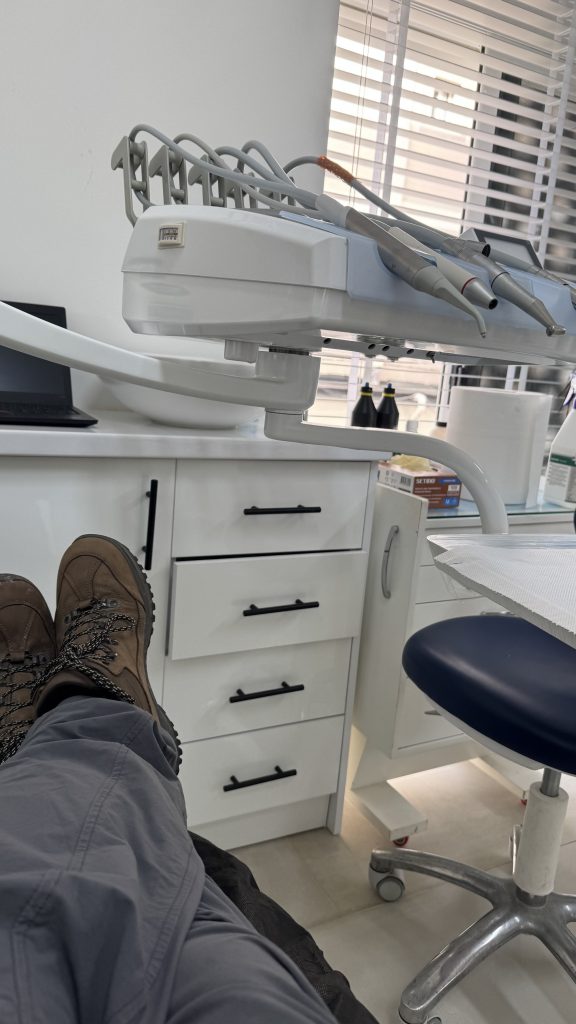
Living within another culture’s systems initially challenges trust simply because the patterns are unfamiliar. In practice, the care received was every bit as effective as at home, and considerably faster to access.
Apps and Digital Tools
App usage shifted heavily toward entertainment during this static period — Netflix and similar services becoming evening routine.
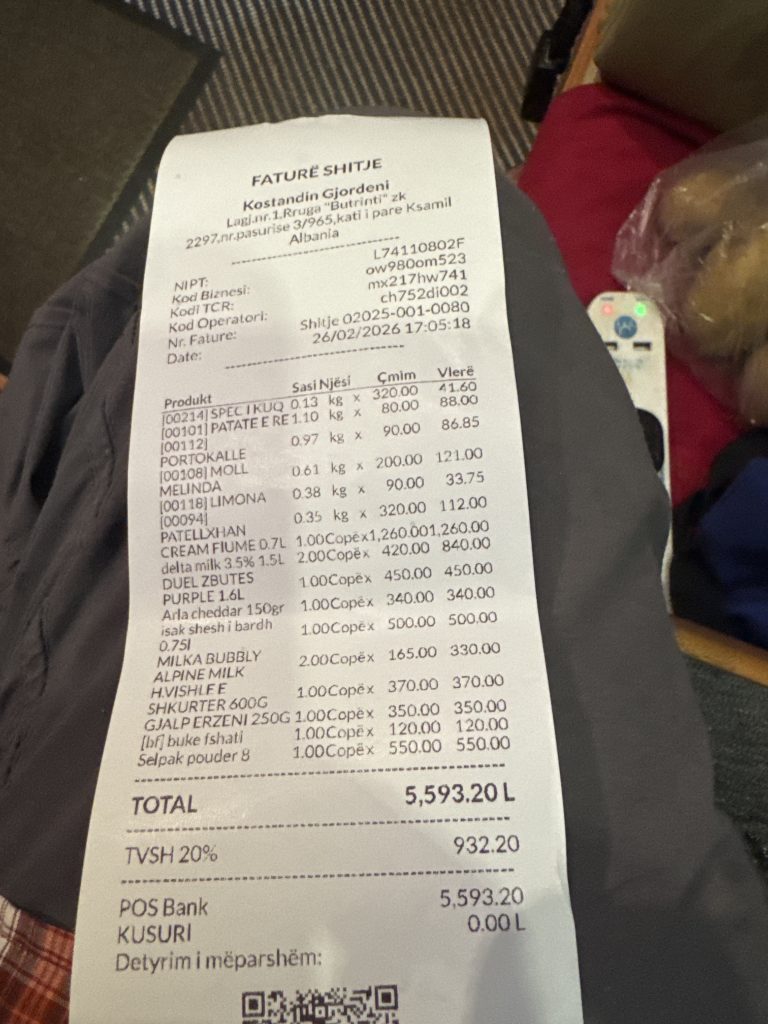
More practically, the calculator’s conversion functions worked tirelessly, helping us understand local pricing, manage spending, and interpret the real economics of daily shopping. ChatGPT assisted in analysing these patterns and turning receipts into meaningful comparisons.
Microsoft Translator saw occasional use, though increasingly ChatGPT proved the more flexible and context-aware option.
System of the Month
For the first time on this journey, one tool clearly stood above the rest.
ChatGPT — present throughout planning, troubleshooting, translation, analysis, and problem-solving — quietly became the most relied-upon system we used this month.
Not as a novelty or search tool, but as an ongoing layer of additional intelligence integrated into daily life.
By a country mile, it tops the table for February.
Closing Reflection
Touring tests mobility systems. Staying still tests living systems.
February showed that the success of life on the road depends less on impressive technology and more on how well systems adapt when travel pauses and ordinary life takes over. The best tools are not the most complex — they are the ones that integrate so smoothly they become part of the background.
And when that happens, the motorhome stops feeling like equipment and starts feeling like home.