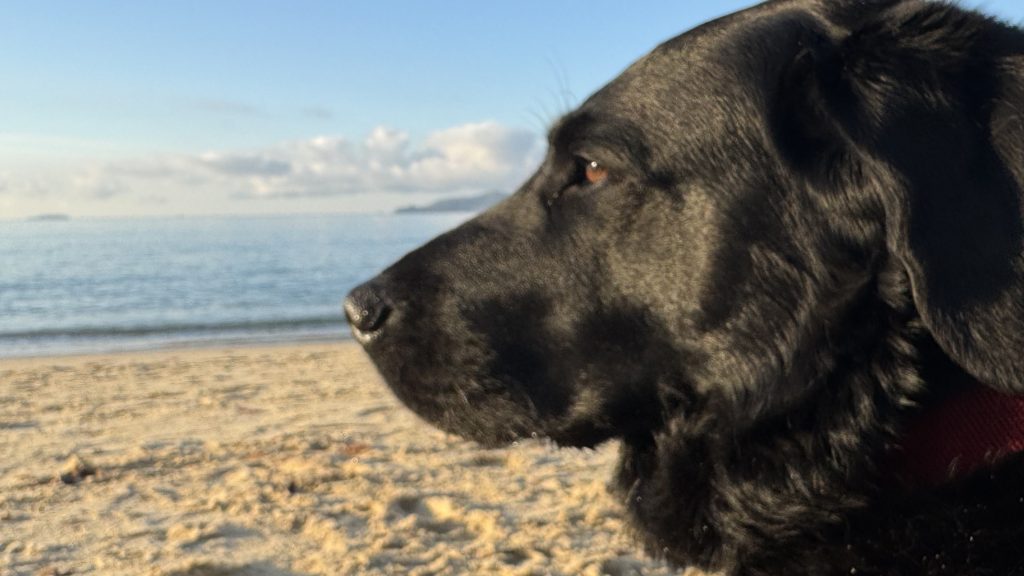

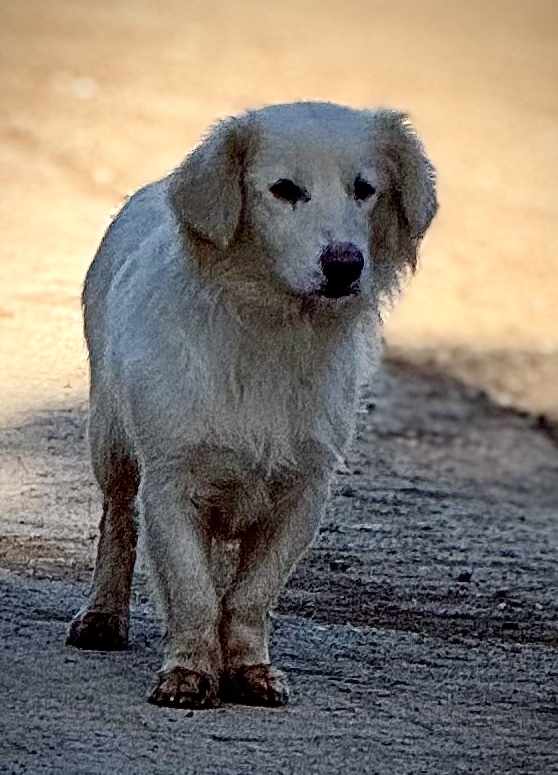
Travelling with a dog introduces you to a layer of a place that most visitors never really notice.
People see the buildings, the views, the food.
Dogs see the system underneath.
Albania: The neighbourhood watch
Walking with Scylla through towns and villages in Albania has revealed a parallel social structure — one organised not by planning authorities or governments, but by territory, food, and instinct.
Street dogs here are not quite stray in the way many Westerners imagine. They are rarely abandoned pets. Most belong to a loose category somewhere between working animal and community resident.
They know their patch.
A café frontage, a stretch of pavement, a dusty junction where three roads meet — these small territories are quietly claimed and monitored. When you enter them the dog may stand, bark, or escort you through. When you leave, the interest vanishes immediately.
It becomes clear that the behaviour is not aggression.
It is boundary management.
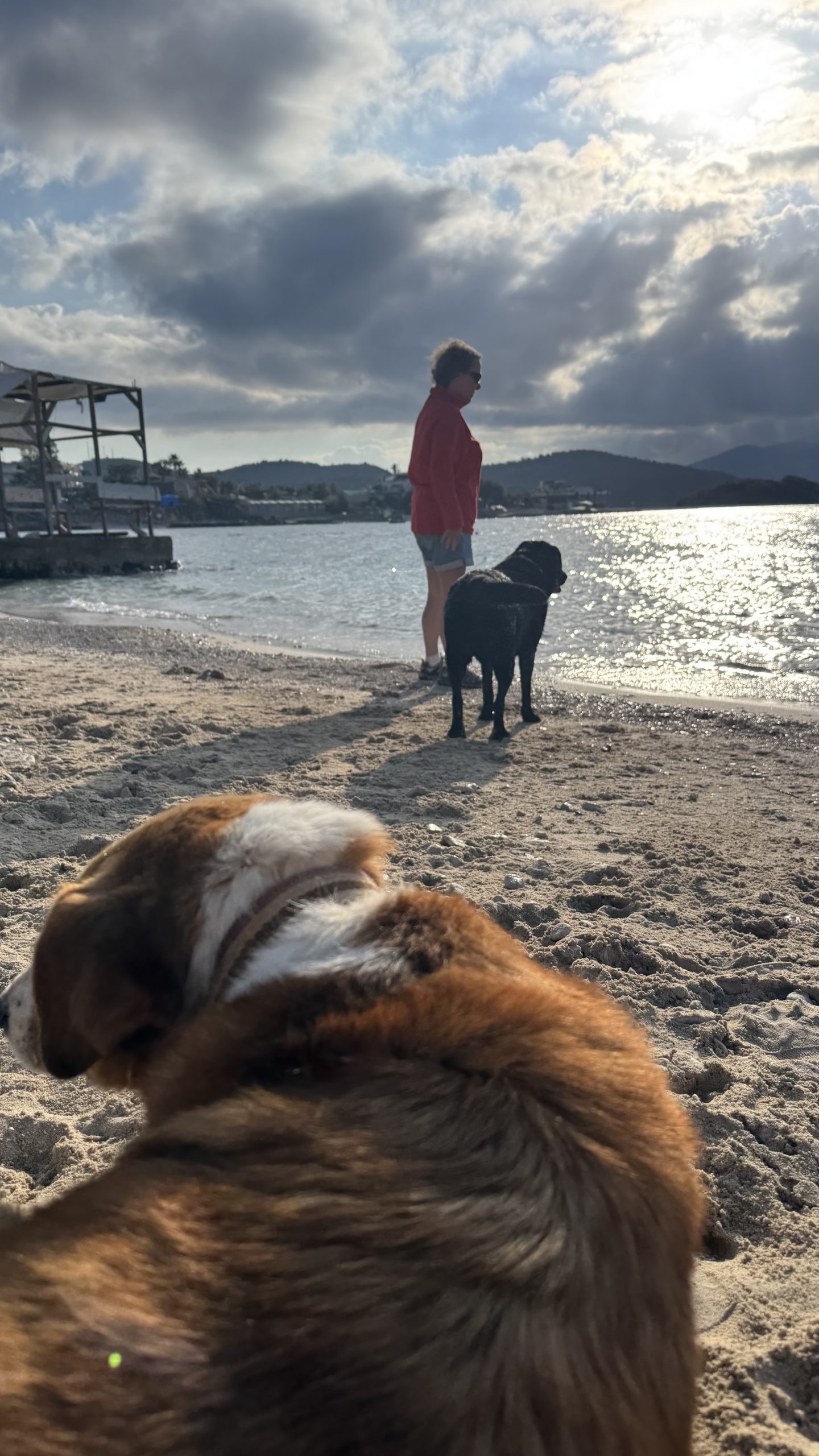
Once you notice it, the pattern becomes remarkably consistent. Each dog appears to control a small invisible zone, and together they form a loose network of guardianship across a neighbourhood.
They operate less like strays and more like an informal security team.
For a visiting dog such as Scylla the system can be confusing at first. She arrives with none of the local knowledge. What appears to us as random barking is, to the resident dogs, a perfectly logical response to an unfamiliar animal crossing an established boundary.
The encounter rarely lasts long.
Once you pass through the invisible line, the dog’s job is done.
Greece: the café society of dogs
Cross the border into Greece and the behaviour shifts noticeably.
Street dogs still exist, but they carry themselves very differently.
They are calmer, often solitary, and far more accustomed to human activity. Many towns run neutering programmes and informal feeding networks. The dogs become something closer to community mascots.
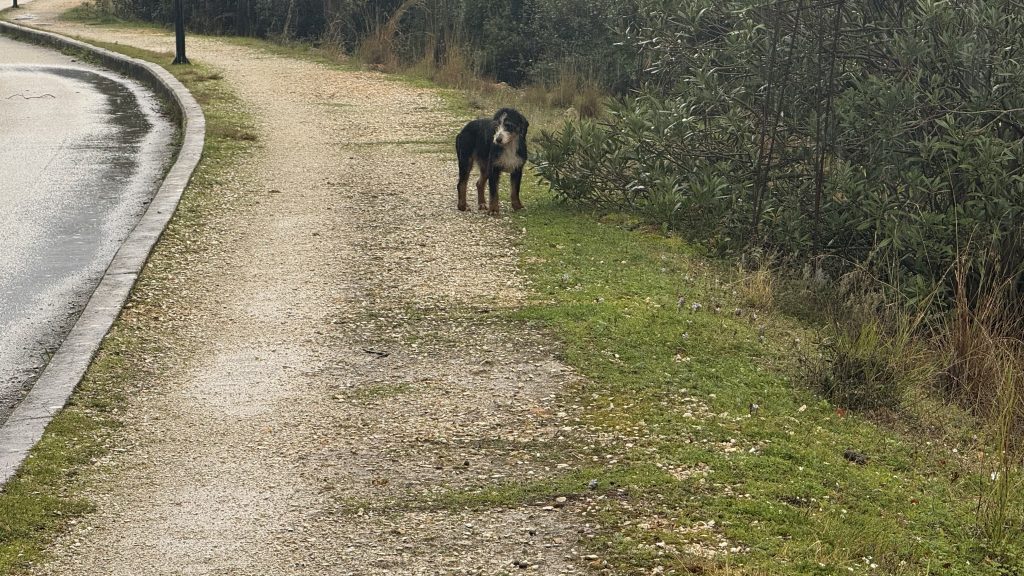
You see them sleeping in the shade of tavernas, drifting between cafés, or strolling lazily through a square as if they belong there — which, in a way, they do.
If Albanian street dogs resemble neighbourhood watchmen, Greek street dogs feel more like part-time café staff.
They observe everything, participate in nothing, and appear quietly confident that someone will eventually bring them food.
Walking the street
Five small adaptations we’ve made with Scylla
Travelling with a dog means you slowly learn the unwritten rules of the local canine world. None of them arrived as instructions. They emerged from observation, trial, and the occasional raised heartbeat.
These are a few of the small adjustments we’ve made when walking Scylla through towns and villages where street dogs are part of everyday life.
1. Learning to recognise the “security guard”
Some dogs announce a boundary simply by standing still.
Feet planted, chest forward, tail held high. The message is unmistakable: this patch is mine. The dog may bark once or twice, but often the real signal is posture.
We’ve learned not to challenge it. We simply continue walking steadily through the invisible line. Once past the boundary, the dog usually switches off as quickly as it started.
2. Reading the “committee meeting”
Occasionally one dog’s bark attracts others.
They drift in from the margins of a street or field and form what can only be described as a small committee. Nothing dramatic happens most of the time, but the group dynamic changes the atmosphere.
Our adaptation is simple: slow the moment down. We pause, stand calmly with Scylla close beside us, and let the situation settle before moving on. Most committees dissolve as quickly as they form.
Occasionally one or two more assertive dogs raise the overall tension of the group and the encounter becomes more adversarial, with the potential to escalate quickly. Thankfully, so far Scylla has remained unscathed — both physically and emotionally.
3. Recognising the nervous alarm
Many street dogs are not guarding territory so much as announcing uncertainty.
They bark rapidly, advance a few steps, then retreat again. Their tails wag nervously, somewhere between curiosity and concern.
We’ve learned that these dogs rarely escalate. Walking steadily and without fuss usually resolves the conversation.
We did have one encounter with a mother of young pups. She reacted aggressively to Scylla’s presence in order to protect her litter. Once the pups had passed the suckling stage she stopped reacting and returned to being a gentle and calm dog.
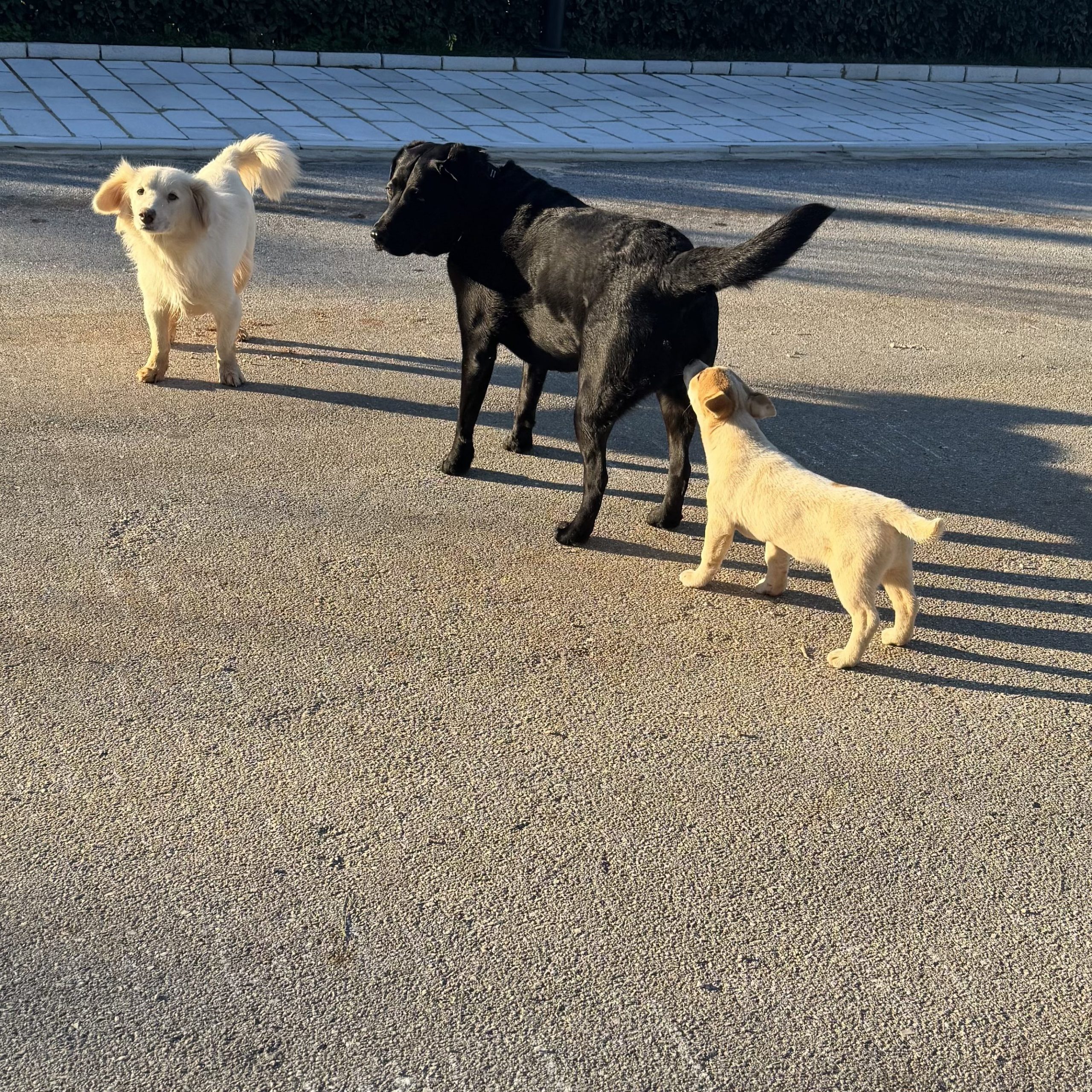
4. Understanding the quiet warning
Very occasionally the signals become quieter rather than louder.
A stiff body. A steady approach. Little or no barking.
It’s a clear indication that the dog is taking the situation seriously. In these moments we stop advancing, give space, and allow the distance to widen again.
Fortunately this behaviour is less common, but when it appears it is unmistakable.
5. Letting Scylla read the room
Perhaps the most useful adaptation has been learning to watch our own dog.
Scylla often notices things before we do — a shift in posture from another dog, a change in mood across a street. Her instinct is usually to observe first and react later.
Trusting that calmness has proved surprisingly effective. Most encounters end not with confrontation, but with everyone simply continuing their way.
The result is that what initially feels chaotic gradually reveals itself as a system.
Street dogs operate according to clear boundaries and signals. Once you begin to recognise them, the street becomes less unpredictable and more like a quiet map of overlapping territories.
And, more often than not, Scylla seems to understand that map better than we do.
A quiet map of a place
Travelling slowly has a curious effect. You begin noticing systems that most visitors never see.
Street dogs are one of them.
At first they appear random — a bark here, a chase there, a sleepy animal lying in the shade of a café. But after a few weeks the pattern emerges. Each dog knows its territory. Each neighbourhood seems to operate under an unspoken agreement about who belongs where.
The dogs are simply responding to the structure around them.
In Albania that structure still carries echoes of rural life, property boundaries and working animals. In Greece it feels more communal, the dogs absorbed into the daily rhythm of cafés and squares.
Either way, they become a quiet indicator of the place you are travelling through.
Travelling with Scylla has made that invisible layer easier to notice. She reads the street long before we do, sensing posture, intent and mood in ways that bypass language entirely.
Watching her navigate these encounters has been a small reminder of something Third Life keeps teaching us.
When you slow down and pay attention, places begin to explain themselves.
Sometimes all it takes is walking through a town with a dog.