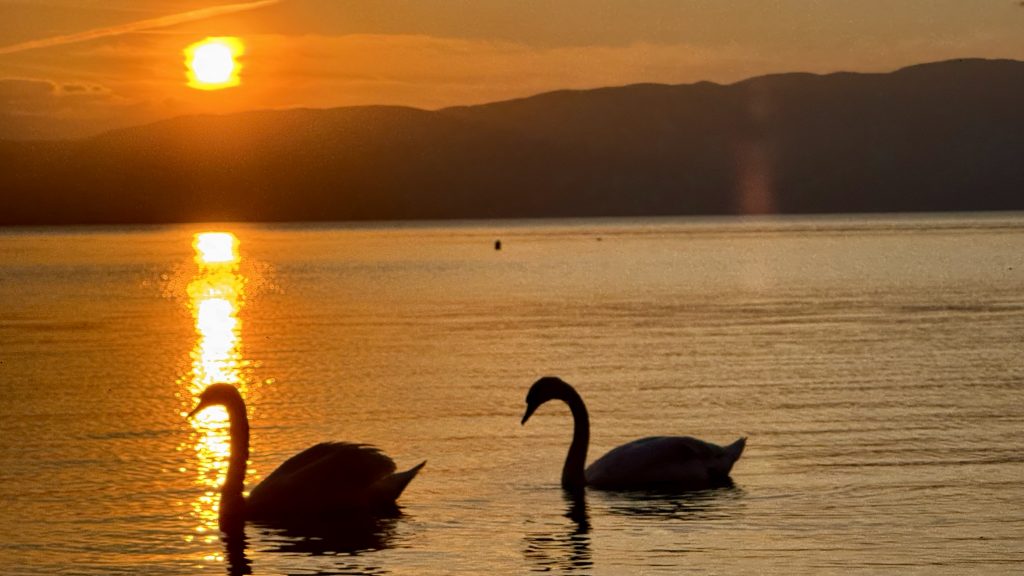

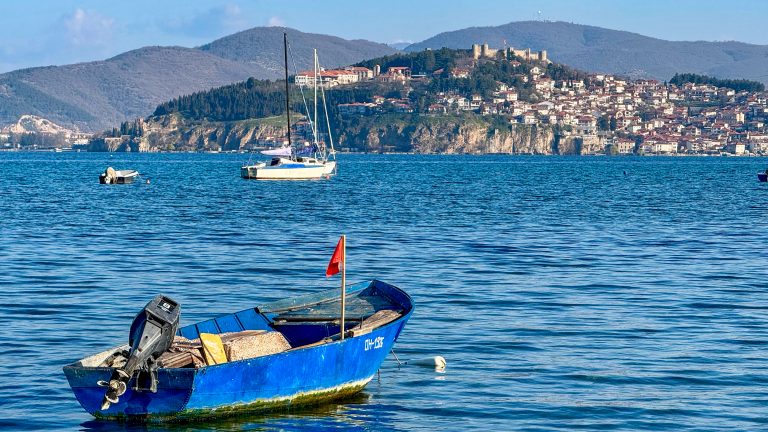
At first glance, Lake Ohrid is simply “pretty.” Its cobalt waters, framed by the sun-bleached terracotta roofs of the Old Town and the snow-capped Galičica mountains, offer the kind of postcard-perfect serenity that has drawn travellers for millennia.
But look beneath the surface—literally and geologically—and you’ll find that this isn’t just a scenic retreat. It is a biological and tectonic miracle that has stared down the Ice Ages and won. At 1.36 million years old, it is one of the world’s few “ancient” lakes. But as modern archaeology and biology are discovering, this “immortal” beauty is now facing an existential crisis.
The architecture of immortality
Ohrid’s survival is no accident of scenery; it is a masterpiece of tectonic plumbing. Most European lakes were carved by glaciers a mere 10,000 years ago—shallow basins destined to vanish as they fill with silt. Ohrid is different. It sits in what’s termed a tectonic graben, a deep rift created as the Earth’s crust pulled apart during the Pliocene epoch.
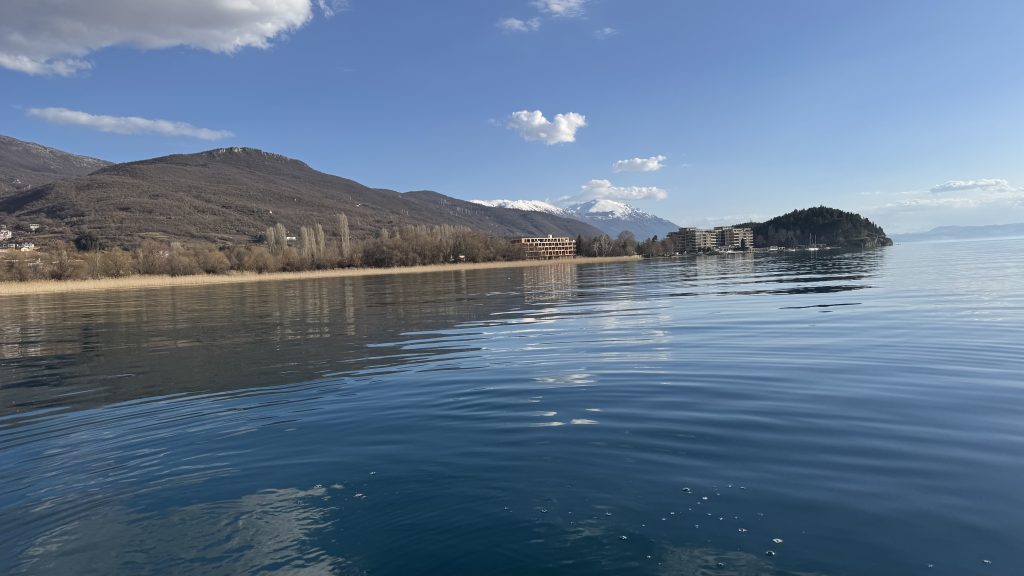
Because the floor of the lake continues to sink even as sediment falls into it, it has never “filled in.” It is sustained by a hidden connection to the higher Lake Prespa, which acts as a massive natural reservoir. Prespa’s water filters through miles of porous mountain limestone, bubbling up into Ohrid through underground karstic springs at Sveti Naum. This constant pressure of purified, oxygen-rich water created a stable “refugium”—a sanctuary that remained liquid and life-sustaining while the rest of Europe was buried under miles of ice.
The “Living fossil” in crisis
This geological stability allowed for a biological miracle: endemic evolution. Because the lake never “reset,” species that went extinct everywhere else millions of years ago continued to thrive here. Today, it hosts over 200 species found nowhere else on Earth.
The most sophisticated of these is the Ohrid Trout (Salmo letnica). In a process known as morpho-typing, this single species branched into four distinct variants to share the lake’s resources without competing. They “partitioned” the water by staggering their spawning:
- Salmo letnica typicus spawns in the deep winter.
- Salmo letnica aestivalis takes the height of summer.
- Others have adapted to specific depths or rocky substrates.
It is a million-year-old masterclass in harmony that is now being unravelled. Prized as a culinary icon and featured on the national currency, the trout has been hunted to the brink of collapse. Combined with the introduction of invasive species like the Rainbow Trout, these ancient specialists are being out-competed in their own home.
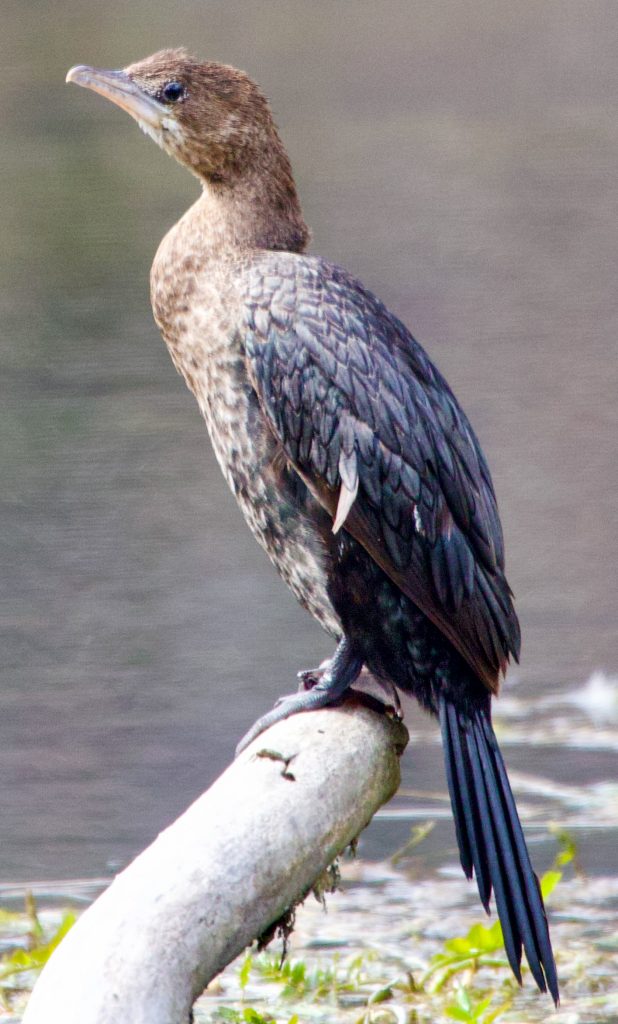
The lake also attracts some rare birds, including the Pygmy Cormorant and the Dalmatian Pelican.
A relic under siege
Knowing the lake’s history today is to face its potential “ecological sunset.” The landmark SCOPSCO drilling project in 2013, which extracted 584 meters of sediment cores, proved that this ecosystem has been a stable “pollen record” of the world’s climate for 1.36 million years.
But that record is being smudged. Uncontrolled “grey” coastal development is choking the Studenčišča Marsh—the lake’s last remaining “natural kidney.” Without these wetlands to filter runoff, the crystal-clear water that has defined the region since the dawn of man is beginning to cloud. We are the first generation in a million years capable of breaking a system that survived the Pliocene.
The Secret of the pearl
Even the lake’s most famous cultural artefact reflects this fragile balance.Ohrid pearls aren’t sea pearls; they are a triumph of local alchemy created using a secret emulsion made from the scales of the Plasica fish—another endemic species. The recipe is held by only two local families (the Talevi and Filevi). It is a stunning paradox: a world-famous piece of jewellery, worn by royalty from Queen Elizabeth II to Princess Diana, Yet their existence depends on a small fish from a prehistoric lake. Remove the ecosystem, and the pearl disappears with it.
The fortress and the faith
The human history is just as deep. Recent underwater excavations near the Albanian lakeside town of Lin have uncovered a submerged settlement defended by 100,000 wooden spikes, dating back 8,000 years. It suggests that even at the dawn of sedentary life, this lake was a prize worth guarding.
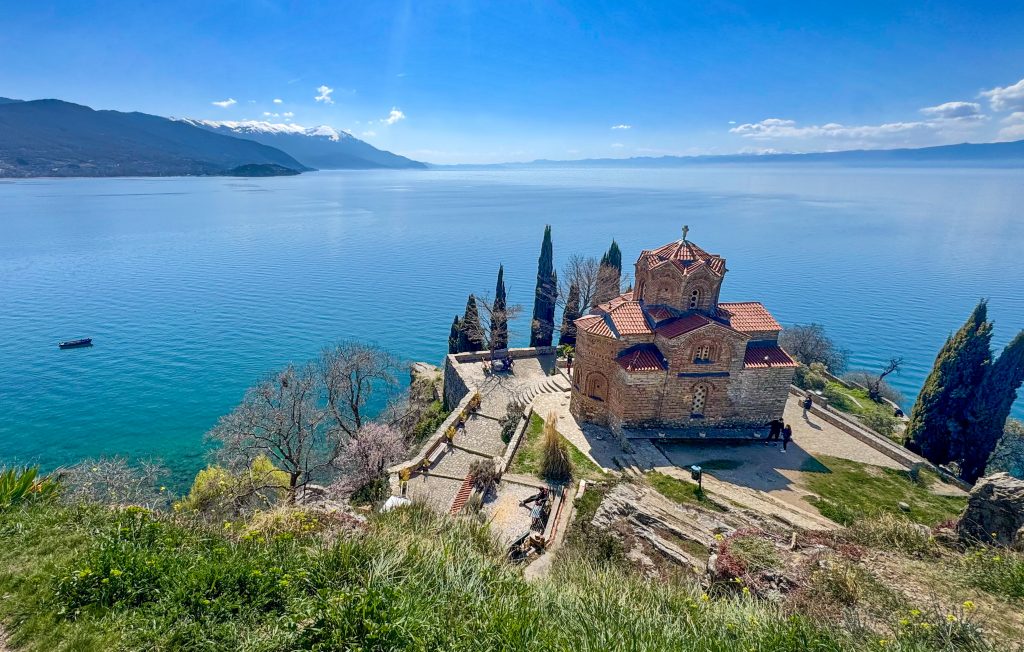
Later, as the “Jerusalem of the Balkans,” Ohrid became the intellectual lighthouse of the Slavic world. It was here that Saints Clement and Naum refined the Cyrillic alphabet, a gift of literacy that changed the course of history for millions. With a church once built for every day of the year, the city remains a place where deep time and deep faith meet.
Will the heartbeat continue?
There is a local legend that if you press your ear to the stone coffin of St. Naum, you can still hear his heartbeat. Scientists will tell you it’s just the sound of underground water surging from Lake Prespa.
Perhaps they are both right. Lake Ohrid is a living, breathing entity—a million-year-old pulse. It has been a “pretty lake” for an eternity, but its beauty is not a given; it is a delicate biological output. Our task now is to ensure that heartbeat doesn’t stop on our watch.