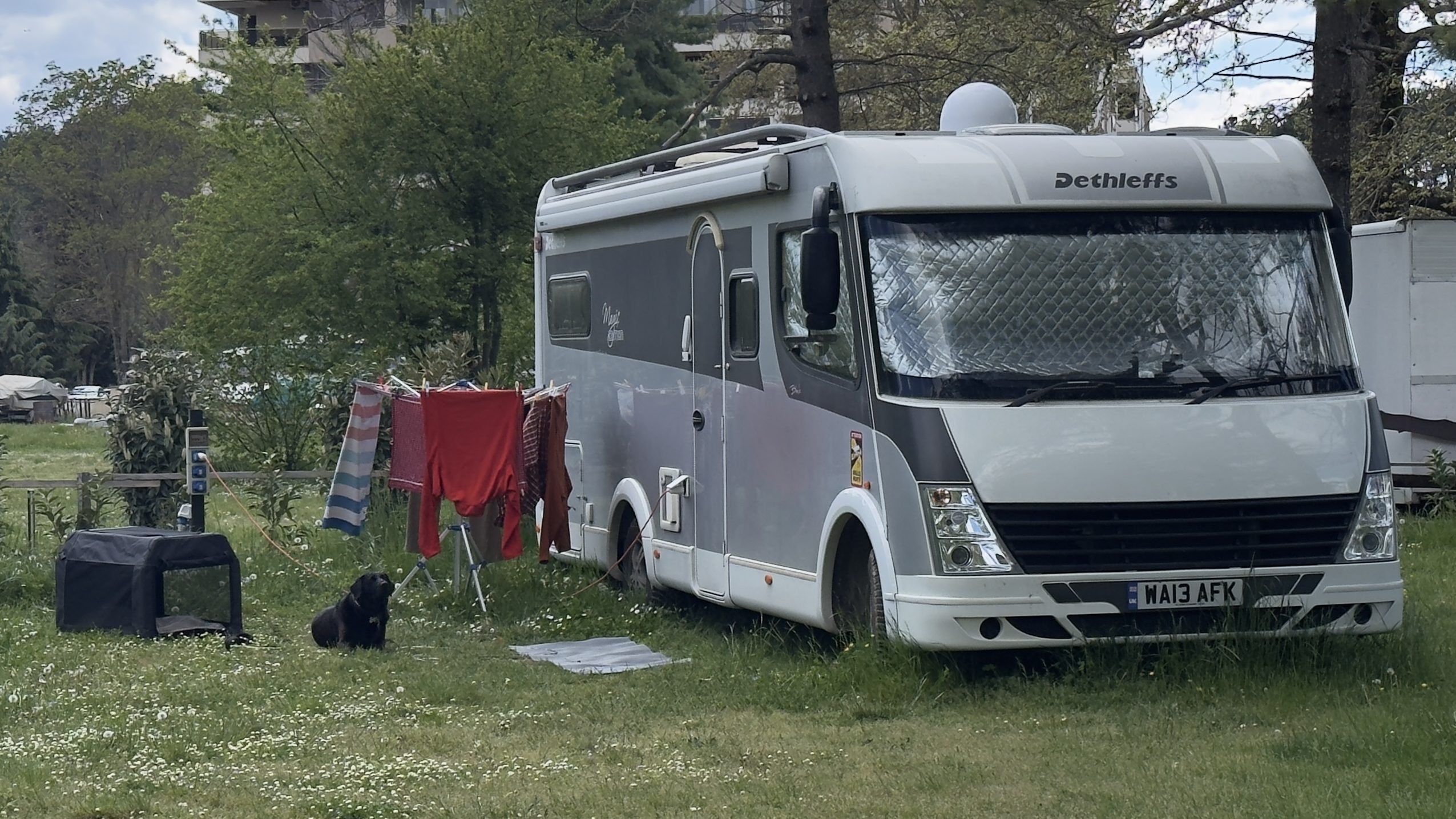

Living full-time in a motorhome is a very different proposition from going away for a week by the sea. What you might pack for a carefree beach break in Wales would quickly become a burden if you had to carry it with you every day. Life on the road introduces two immovable realities: weight and space.
Motorhome manufacturers are remarkably clever at making a small space feel generous. Every locker, hinge and fold-away surface has been designed to perform more than one task. Even so, compromises are inevitable. Somewhere there is always a cupboard that is just a centimetre too low, or a layout decision that favours a spacious rear lounge but sacrifices garage height.
We have been fortunate. The layout of our van suits us remarkably well as it came from the factory. That is not something to take lightly. Conversations on campsites often drift towards quiet frustrations: a garage that will not take bicycles, wardrobes that are too narrow, beds that steal valuable storage space. We seem, slightly unusually, to have landed in the minority who feel the designers largely got it right.
That does not mean everything is perfect. Our garage, the external storage locker beneath the rear lounge, is not particularly small, but its height is restricted. Some things simply will not fit. Oddly, that limitation has turned out to be helpful. It prevents the temptation to carry items that might come in useful “one day” but mostly serve to increase the vehicle’s weight.
Weight — or payload — is the constant background calculation in motorhome life.
Every motorhome carries a metal plate near the habitation door stating its maximum permitted weight. Ours is four metric tonnes when fully loaded. That sounds generous until you understand how the numbers work. The manufacturer’s quoted “unladen weight” already includes the driver, but not passengers. In our case that means Pip and Scylla together add roughly 100 kilograms before we have loaded a single item. Our main power station weighs another 45 kilograms.
With around 950 kilograms available for everything else — clothing, kitchen equipment, electronics, water, tools, food — the margin disappears surprisingly quickly. I keep a spreadsheet to track what we carry and how close we are to our limit. It may sound excessive, but the discipline has made us both far more thoughtful about what earns a place in the van.
Over time we have developed a few simple rules.
First, everything must earn its place. Nothing is carried simply because it might be useful.
Second, wherever possible an item should perform more than one function.
Third, it must make sense in terms of weight, physical footprint and power consumption.
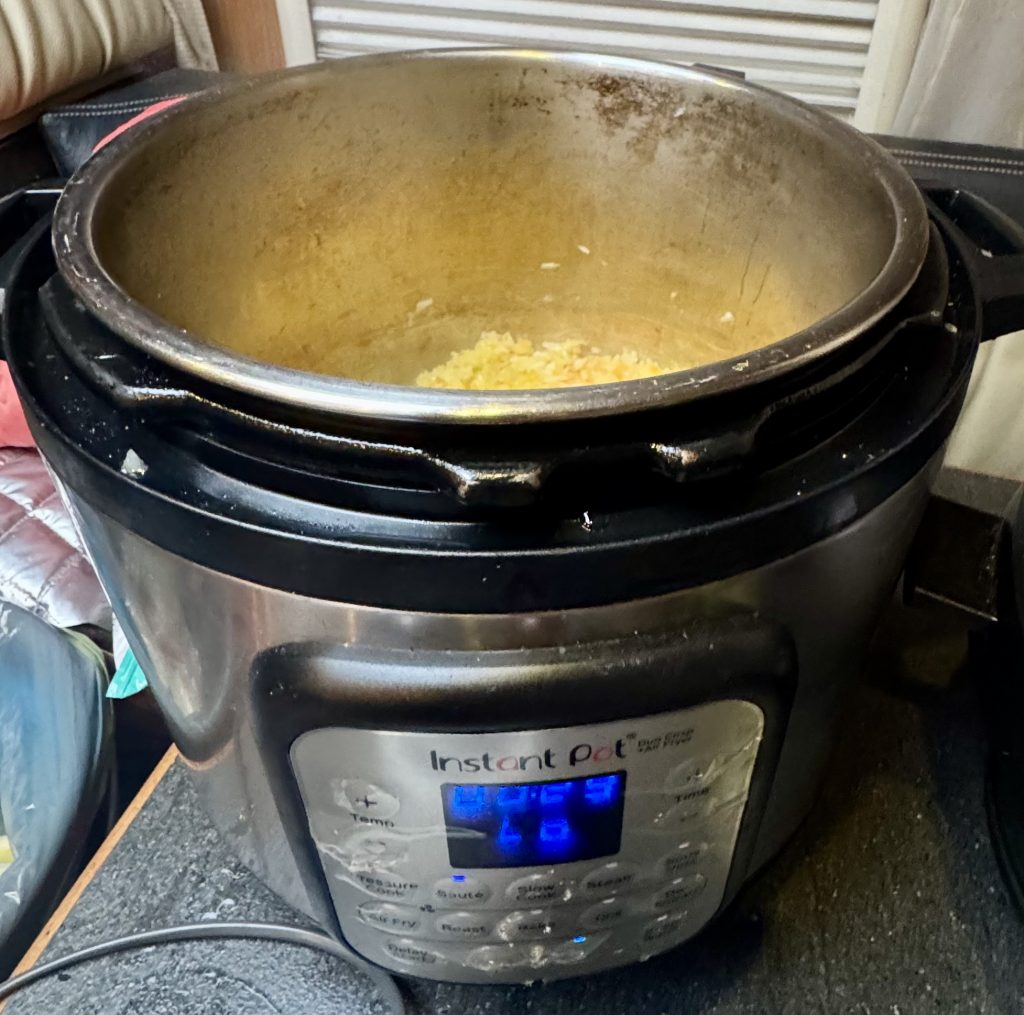
The Instant Pot Duo Crisp is a good example. It is our primary cooking appliance and replaces several others. It can pressure cook, slow cook, roast, bake and air fry among its many functions. It is what I use for batch cooking ragù, curries and chilli. It produces excellent jacket potatoes and even bakes bread. One appliance doing the work of several others is exactly the sort of compromise that makes sense in a small travelling kitchen.
Our fridge and freezer operate on gas, mains electricity, or the vehicle battery while driving. Like most systems in a motorhome it works well but benefits from a little improvisation. I added a small rectangle of polystyrene inside the freezer door after noticing items near the door were warming slightly. It was a tiny adjustment but solved the problem immediately.
Small tools matter too. Our stick blender is lightweight but remarkably capable. It blends soups and sauces, chops onions and herbs, and even whisks cream. In a conventional kitchen it might seem modest. In a motorhome it earns its place easily.
The van also becomes other spaces when needed. Resistance bands attached to an anchor point on our drop-down bed allow us to create a small exercise space. When travelling full time you learn to look at every surface and fixture with a slightly inventive eye.
Our sleeping arrangement is one of the van’s better design features. The bed sits above the driving area and lifts during transit to provide headroom. When we stop it lowers in less than a minute. It is a full queen-size bed with a memory-foam mattress we added ourselves. Curtains separate it from the rest of the van, creating a surprisingly comfortable bedroom.
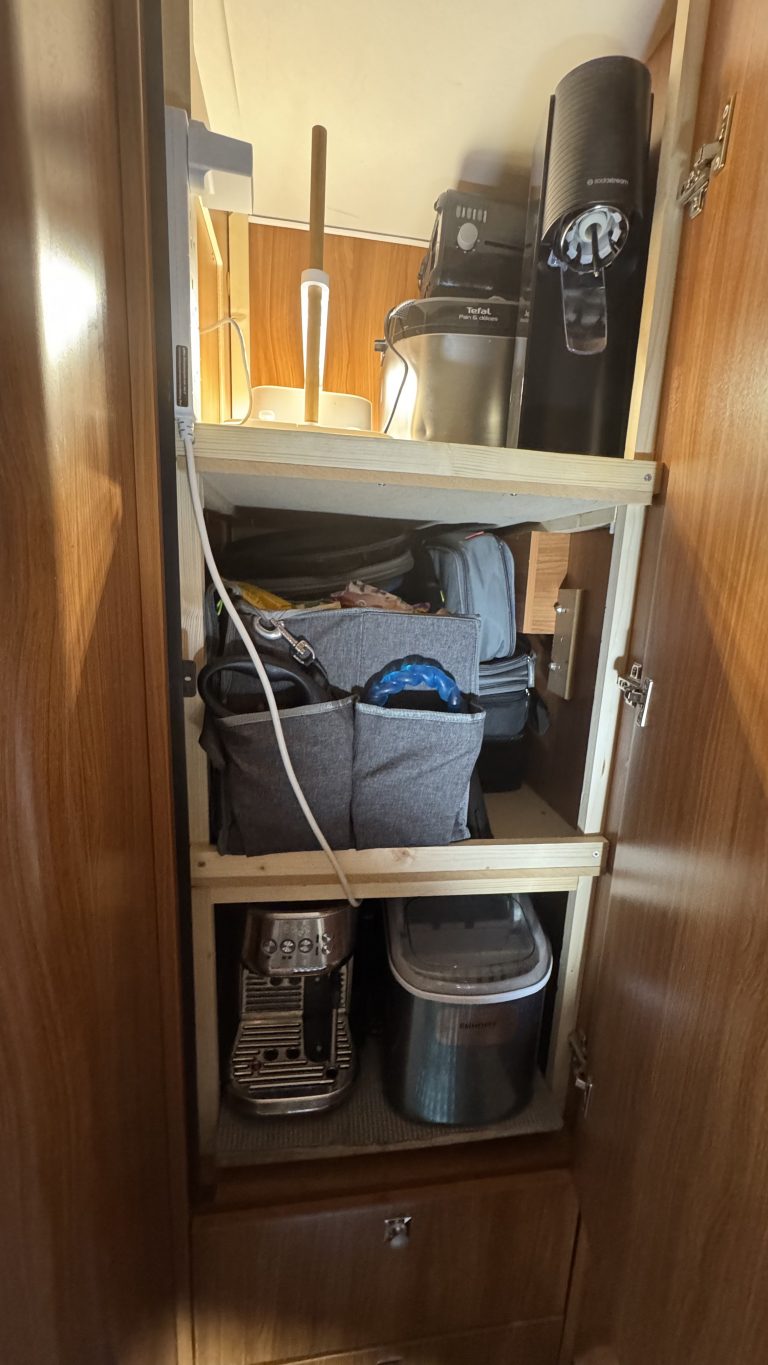
Immediately behind the passenger seat is our dining table. It officially seats four, though we rarely use it that way. In practice it has become my kitchen workbench. Food preparation happens there, and our cooking appliances live on it when we are stationary. When we travel they are stored securely in the seat locker beneath.
The other seat locker houses our 100-litre fresh water tank. Water is heavy, so when driving we usually keep the tank only a quarter full and refill once we reach a campsite.
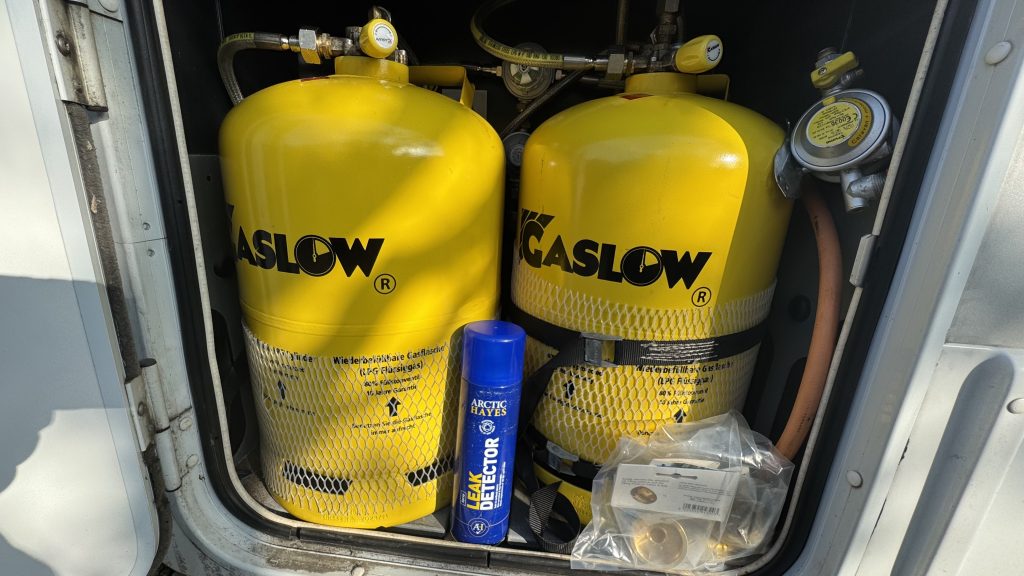
The kitchen itself is compact but well equipped. A three-burner hob sits above an oven and grill. Both are fuelled by LPG — liquid propane gas — known variously as GPL in Europe and Autogas in parts of the Balkans. The same fuel also powers the fridge and the water heater.
We carry a microwave, and two items that perhaps qualify as small luxuries: a coffee machine and an ice maker. Opposite them, mounted prominently on the wall, are a fire extinguisher and fire blanket — equipment that proved their worth only this week during our electrical fire incident.
Shoes present a surprisingly persistent challenge in motorhome life. Left unmanaged they spread across the floor like driftwood after a storm. Our solution was simple: a net fabric shoe organiser hanging on the outside of the bathroom door. It narrows the walkway slightly but keeps every pair off the floor and instantly accessible. In the quiet mathematics of van living, that is a good trade.
On the inside of the bathroom we have a loo, wash basin and a full-sized shower. We keep a small high-speed spin dryer in there to make drying clothes quicker, easier and reducing the amount of moisture into the van – our biggest problem.
At the rear of the vehicle is our main living area: a U-shaped lounge formed by three long benches. One is Pip’s, one is mine, and the remaining two are theoretically Scylla’s — though she often decides mine is the better option. With a table in the centre the space becomes our dining room, office and games table. Beneath the seating is additional storage, including a sheltered space that Scylla has adopted as a den roughly the size of the crate she sleeps in at home.
Above the lounge run a series of overhead lockers, each with a clearly defined purpose. Once a locker is full, that category of item is closed. Pip and I each have a single locker for clothing. There is nowhere else for it to go, so choices are made carefully.
The garage beneath the lounge is accessed from outside. It contains the practical equipment that supports daily life: spare toilet cassette, electrical cables, water hoses, fresh and grey water carriers, a toolbox, a rotary washing line, and our swimming gear including wetsuits and an inflatable kayak.
That is the complete inventory.
Food lives in the lockers above the kitchen. Scylla has her own locker for toys, food and equipment. We keep another dedicated locker for our prescription medication.
Everything has a place, and once those places are filled, that is the end of the matter.
Seven-point-four metres may not sound like much space to house three lives, but over time it becomes something more than a vehicle. It becomes a small, carefully balanced ecosystem.
A house that moves.