

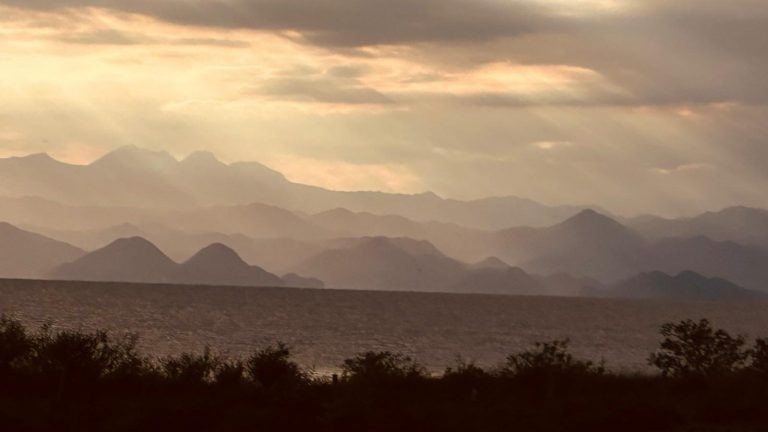
After ten weeks, we finally left Ohrid. Long enough for routines to become normal and familiar faces to become part of daily life. We could easily have stayed longer had it not been for the bureaucratic pressure of still being within our 90-day visa allocation. Without that pressure, we may well have delayed the decision longer.
The original plan had been to leave North Macedonia via Kosovo and, in doing so, see more of the country. Prizren remained tempting and would almost certainly have been manageable, but the combination of adapting after losing much of our off-grid backup power and Kosovo’s relatively sparse campsite infrastructure reduced our confidence for a deeper mountain route. Snow was still falling in some of the higher areas and, rightly or wrongly, we chose certainty over ambition this time. Instead, we exited via Albania.
The Albanian Road infrastructure was surprisingly good, and we made steady progress towards Lake Shkodra Resort. The site itself was a significant transition after our relaxed lakeside pitch in Ohrid. Highly structured, highly managed and noticeably corporate in feel, it initially came as something of a shock after the loose informality we had grown used to.
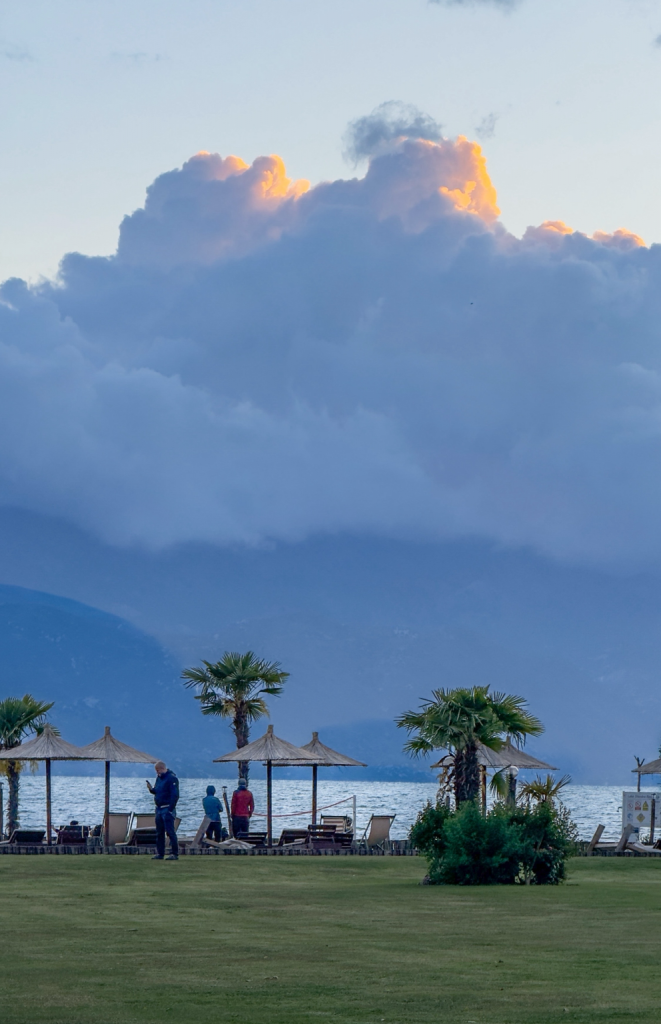
Funny how acclimatisation works. What first felt sterile and uncomfortable slowly became familiar and manageable. We found routines again. Evening walks by the lake. Quiet coffees. Watching the changing light over the water. Even the restaurant tempted us more than we expected. One evening, surrounded almost entirely by German motorhomes arranged with geometric precision, we found ourselves oddly amused by a neighbour carefully ironing towels outside a caravan. The comfort was real enough, but unlike Ohrid there was no real draw to stay longer than planned. Some places invite dwelling; others simply support transit.
Our onward move into Montenegro was oddly anticlimactic. Border crossings, after all the anticipation that often surrounds them, are often just another piece of road. We also managed to travel on Montenegro’s Independence Day without realising it beforehand, which explained the closed supermarkets and slightly festive atmosphere that initially puzzled us.
Montenegro at once looked and felt different to Albania: tidier, sharper and more refined, more akin to the North Macedonia we had enjoyed so much. We are now back on a relaxed site, parked among olive trees said to be over three hundred years old, with the town a short walk away and the Adriatic closer still. The swallows here seem to work as an organised aerial unit, skimming the motorhome at eyebrow height whenever Scylla wanders too close to their invisible boundary lines.
The biggest transition now is seasonal rather than geographical. We have moved from the softness of spring towards the edge of summer. That shift applies as much to Scylla as it does to us. Heat management, shaded walks, cool surfaces and altered daily rhythms are now becoming part of everyday life. The Balkans are changing with the season and, in turn, so are we.
In this issue
This month’s edition centres on re-calibration: the quiet ways long-term travel changes not only how we move through environments, but how we respond to them.
The feature article explores how movement, environment and daily life begin interacting over time, and how paying attention to those interactions can reveal aspects of the journey that are often difficult to see whilst living through them.
Scylla’s View focuses on the transitions a black Labrador faces whilst moving between environments and climates, from the cool softness of Ohrid’s spring to the increasing heat of the Adriatic coast.
Nomad Life explores the same transition from a human perspective, looking at the ways we are adapting the environment around our canine travelling companion so that she can continue to thrive as conditions change.
Living in the Van examines our re calibration after losing much of our auxiliary power capability and the gradual realisation that many things we had unconsciously framed as needs were luxuries wrapped in habit and convenience.
History and Culture explores the idea of “borders you can feel” — the subtle but noticeable changes in atmosphere, behaviour and environment that occur when moving between neighbouring Balkan countries.
Food and Drink reflects on how our relationship with food changes depending on the mode of travel itself: dwelling, transit, recovery or movement.
Finally, Systems and Tech — now renamed Resilience on the Road — looks at redundancy, modularity and the behavioural shifts that appear when travelling through changing environments over longer periods of time.