
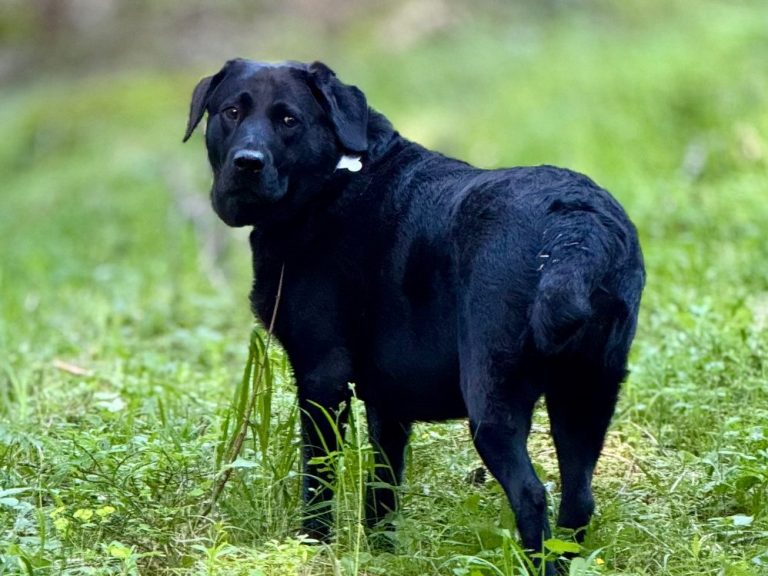
We chose this life. Scylla didn’t.
That means her experience of it matters at least as much as ours. Not as sentimentality. Not as a slogan. Simply because of asking another species to live inside a world largely shaped by human decisions.
Over time, we realised the important question was not whether Scylla could tolerate the journey, but whether the life itself was genuinely good for her. Not merely survivable. Good.
In a house, a dog can absorb human routines from the edges. There are separate rooms, gardens, familiar smells and established territories. In a motorhome, everything becomes shared. Heat, movement, cooking, mood, weather and tiredness all exist together inside 7.4 metres. That could make the world feel exceedingly small.
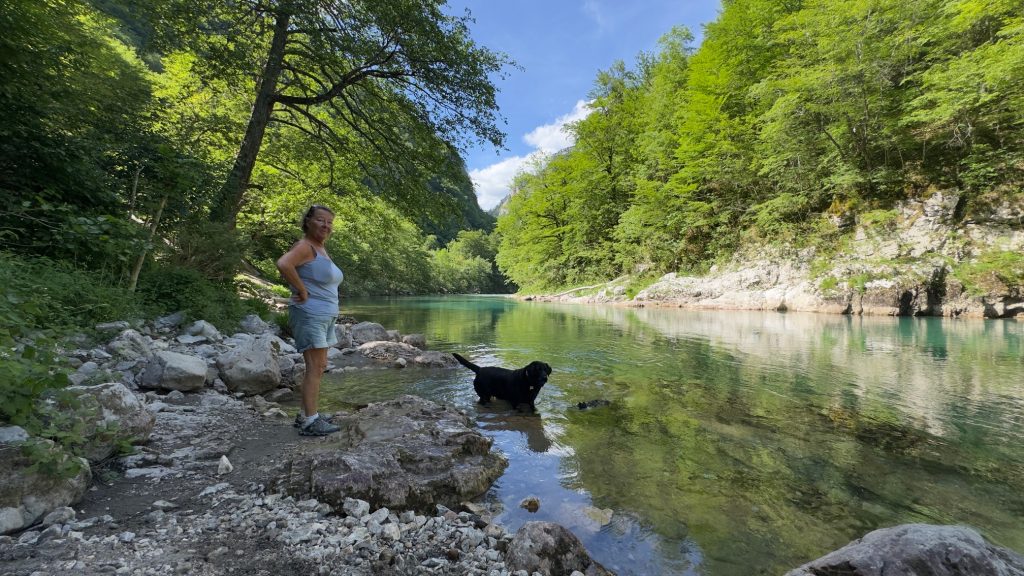
For Scylla, we have tried to make it larger. Her days now hold an extraordinary amount of sensory richness. Beach sand, lake water, mountain air, pine woodland, reed beds, ferry ports, old stone towns and campsites spread across different countries.
In Ohrid, local street dogs seemed to leave entire social histories written across benches, walls and grass verges. Here in Montenegro, the sea air arrives through the van doors before sunrise and the beaches change character completely between morning and evening. Some mornings she carries a stick down the shoreline as if this is the obvious purpose of the entire expedition. Which, from one entirely legitimate perspective, it may well be.
This is not simply a dog being transported through Europe while the humans pursue the interesting bits. Scylla experiences the journey through a completely different sensory and behavioural world from ours, but no less meaningful a one for that. So, our role is partly stewardship and partly interpretation.
At the beginning of the journey, she sometimes appeared uncertain when the travel harness came out. Now the sequence itself has become part of the household rhythm. The bed lifts, the cab seats rotate back into driving position and, before we are fully ready ourselves, she has already taken up her position lying calmly between the seats waiting for departure.
More importantly, she looks relaxed there. No ears pinned back. No yawning, panting or avoidance behaviours suggesting tension. When we stop and switch off the engine, she does not spring upright as though enduring the journey until release. More often she simply lifts her head briefly, loose-limbed and calm, waiting to see whether this stop matters or whether the road will continue. If that changed, we would adapt accordingly. Shorter driving days. More stops. Different rhythms.
The point is not to preserve the expedition exactly as imagined. The point is for the life itself to remain good for all three occupants. That same adjustment now shapes our days in the emerging heat. There is little point squeezing an extra half hour from the beach because the humans want another swim if Scylla is beginning to tire or overheat.
Equally, dogs are not always dependable judges of their own limits. Excitement, attachment and determination can carry them beyond what is sensible for them physically. Part of the responsibility is learning where enthusiasm ends, and over-extension begins. So, the rhythm changes naturally.
Early mornings. Shade through the hottest hours. Evening walks once the sand cools and the air softens again.
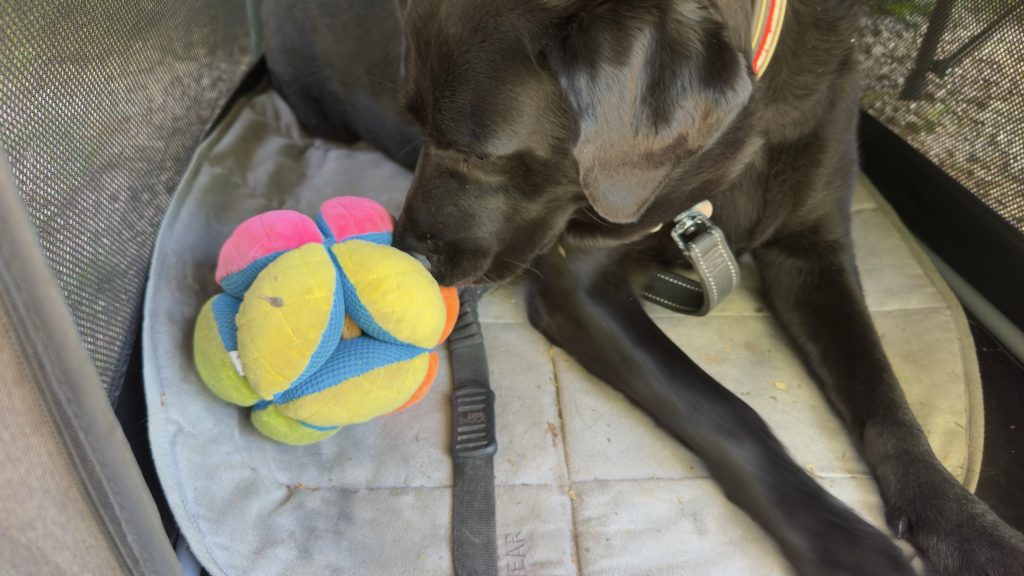
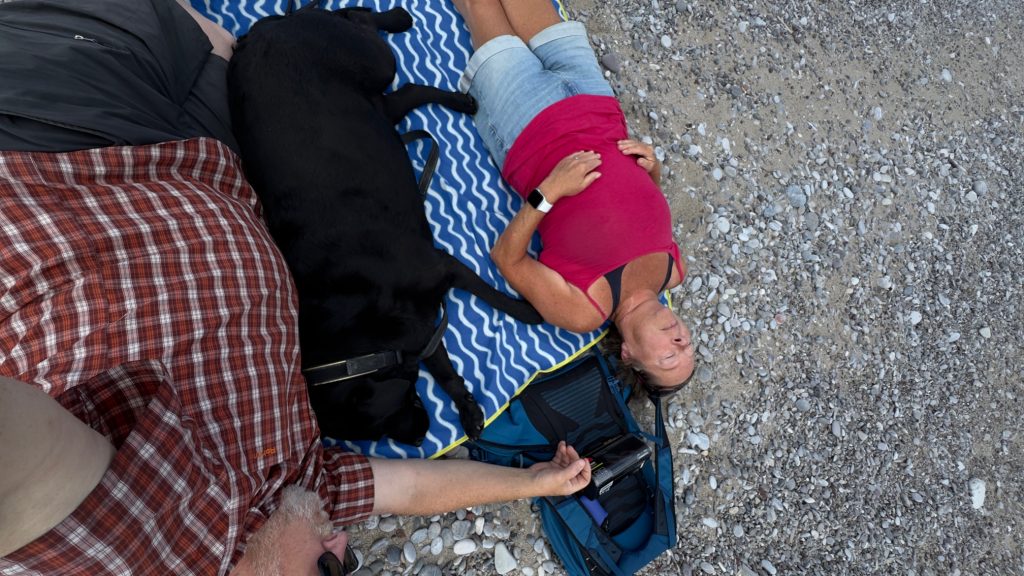
And, conversely, tuning into Scylla’s rhythms has altered ours as well. In the heat, the day now divides quite naturally. Pip heads to the beach. Scylla retreats into the cool shadow of her crate while I sit outside the van beside her in the shade of the olive grove, reading or writing while she sleeps.
A younger version of me might once have considered that wasted time. It no longer feels that way. One world. Three ways of simultaneously inhabiting it. Scylla does not understand visas, campsites, Schengen limits or why one lake gives way to another. But she knows the shape of the household. She knows the sound of the van settling for the night. She knows where coolness gathers during the heat of the day. She knows the evening walk is different from the morning one. And increasingly, she seems to understand that this is her life too. Not as luggage or obligation. As one of the travellers.