
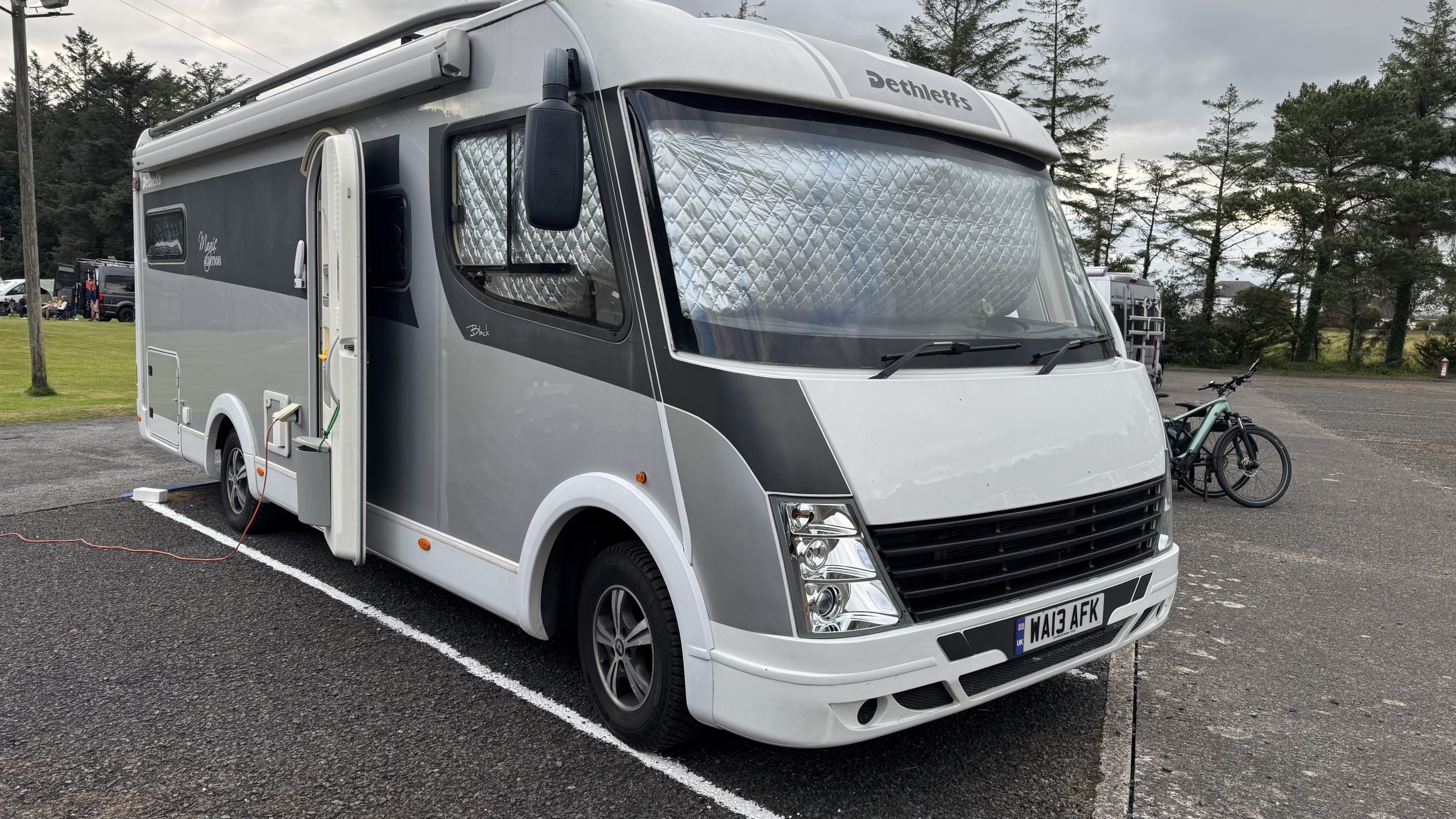
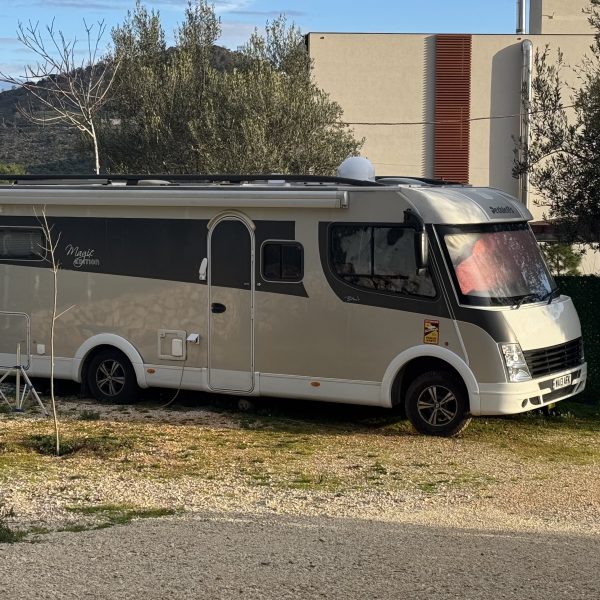
If you travel long enough in a motorhome, you discover two things very quickly: first, that the manufacturer gives you a decent set of systems to begin with. Second, that they’re never quite enough. This post is about the upgrades I’ve made to our Dethleffs — not because I’m a tinkerer (I’m not), but because the road demands flexibility.
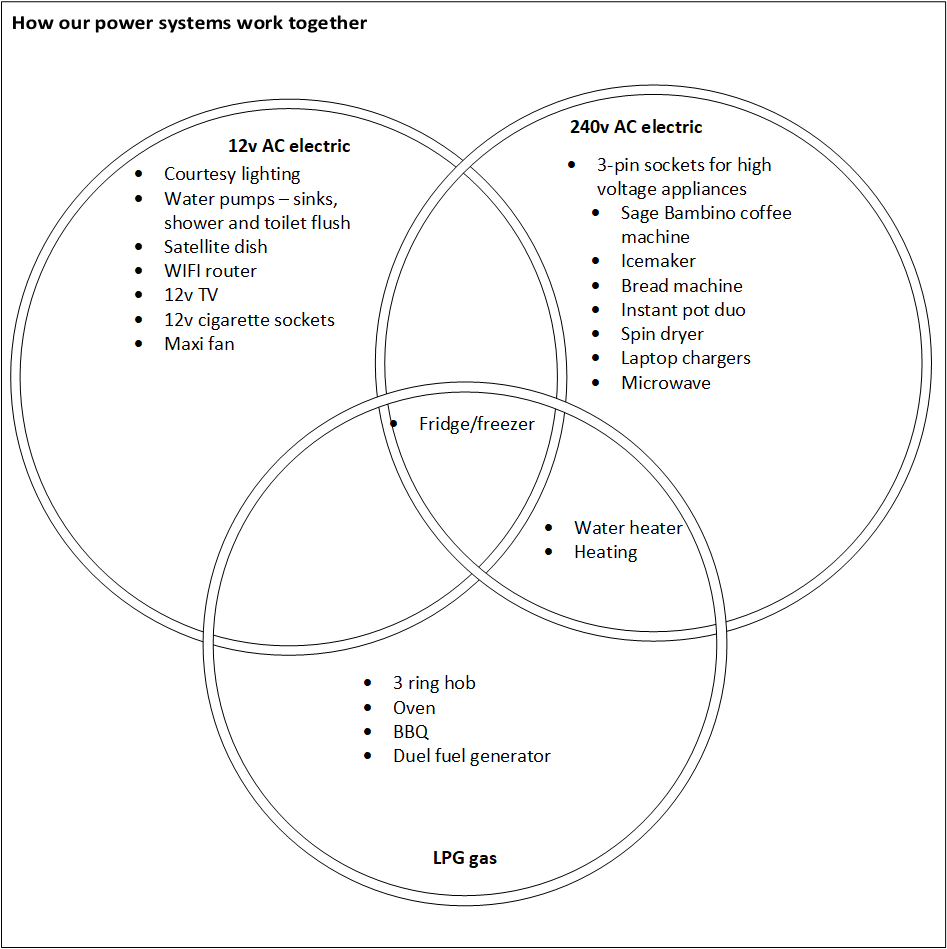
Three core power systems
The motorhome comes with the basics:
- DC via the leisure battery.
- AC via the hookup socket.
- Gas via the LPG point.
That’s it. Solid, simple, functional. But for life on the road — long stretches off-grid, different countries, shifting weather — those three needed to talk to each other more cleverly.
DC: Keeping it simple (and smarter)
We upgraded to a lithium leisure battery, with a dedicated solar panel feeding it and a car charger topping it up while we drive. This battery is the beating heart for the base systems — lighting, pumps, fans, and the like.
One decision raised eyebrows when we mentioned it: no inverter. Why? Because an inverter turns DC into AC, and in the process, it wastes energy. We want our DC to stay DC, powering what it was designed to. Clean, simple, no faffing.
AC: Hookup with a twist
On the AC side, we’ve got the usual suspects — two 25m hookup cables and one 10m, for when we’re tucked awkwardly on a pitch. Add to that adaptors for Europe and a reverse polarity cable, and we’re good to go anywhere.
But here’s where the cleverness comes in. We’ve integrated an EcoFlow Delta Pro into the system. On its own, it’s basically a glorified extension lead — a way of powering a few appliances. But paired with a smart switch, it becomes something else entirely. The moment shore power drops, the Delta Pro takes over as the main power supply, seamlessly. It’s not backup — it’s continuity.
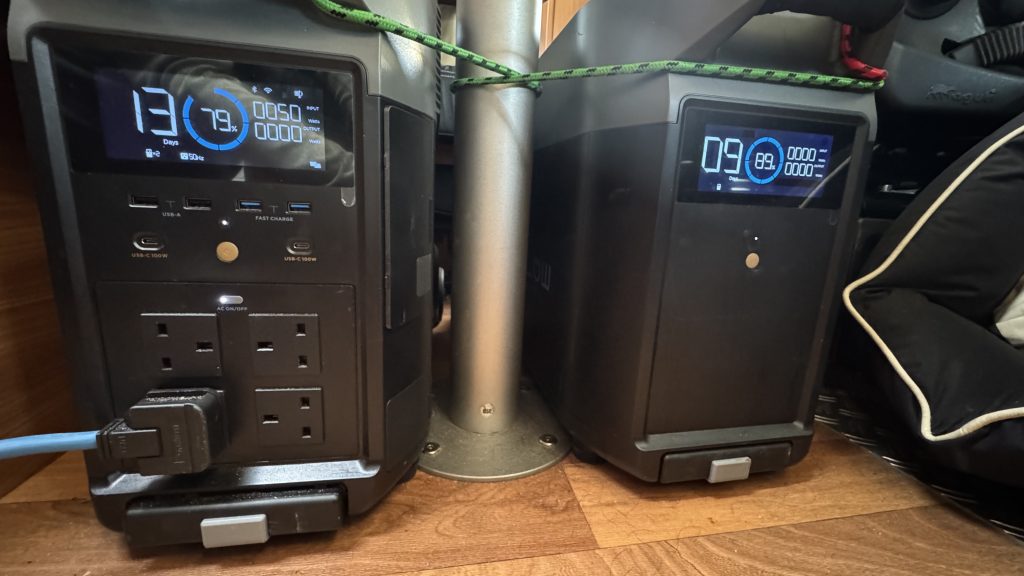
Even better, the Delta Pro charges in more ways than a Swiss Army knife has blades:
- Alternator — 10% charge per hour of driving.
- Solar panels — on the roof, free from the sky.
- AC shore power — when plugged in at a site.
- Commercial EV charging points — if desperate, I could top up at an electric car station.
That’s flexibility. That’s independence.
Gas: The old workhorse
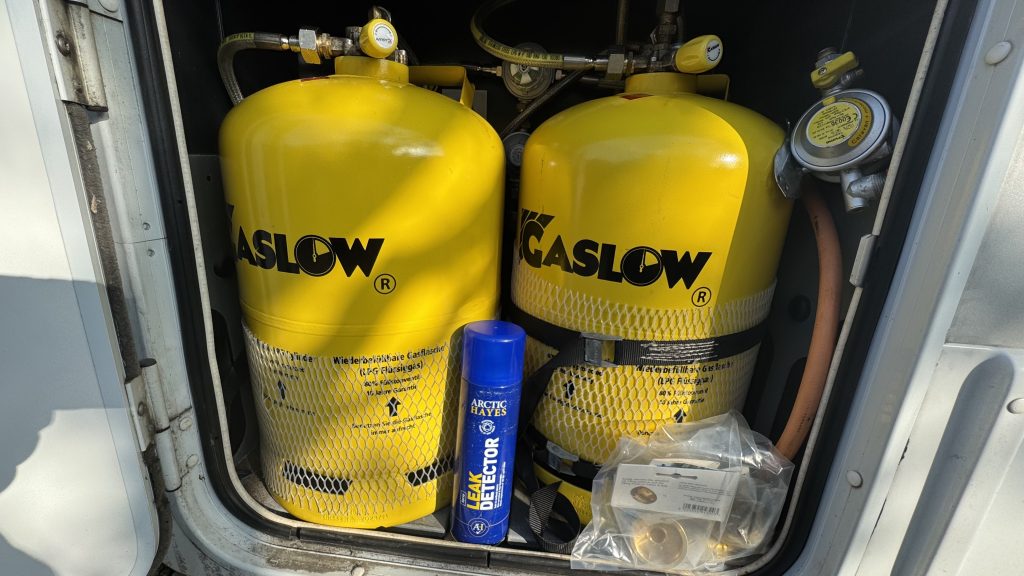
Gas is still part of the system, and why not? We’ve got two 11kg refillable Gaslow bottles, with adaptors for Europe. LPG is cheap, plentiful, and well distributed across Europe. It’s a safety net when all else fails. We have a generator that can run off LPG as well as petrol. It is a useful fall-back option, but we will not be taking it on our tour of Europe and Africa; payload considerations and they are not tolerated well in aires.
Water: Safety first
Nothing exotic here except one tweak that matters: an in-line UV filter. Wherever we fill up, the water is filtered and safe. For flexibility, we added a 12V socket next to the water outlet, so we can drop a submersible pump into a barrel if we’re topping up from a less conventional source.
Fresh water in an Aquaroll, grey water out via a Wastemaster. Basic, but it works.
The unseen systems: Hygiene & comfort
It’s easy to overlook these, but they make the difference between camping and living.
- Laundry: a Scrubba bag for handwashing, and a small spin dryer. The dryer is a game-changer — not for finishing clothes, but for getting most of the water out so they dry quickly without damp creeping into the van.
- Toilets: two cassettes, one carried in a sealed bag. With that setup, we can go six days off-grid without searching for facilities.
- Shoes: a hanging rack on the bathroom door keeps boots and trainers out of the way and off the floor. Small fix, big win.
- Bed: we replaced the factory mattress with a luxury memory foam one. This one change has probably made the biggest difference to daily comfort. Travel is tiring; sleeping well resets the whole system — us included.
Cooking & creature comforts
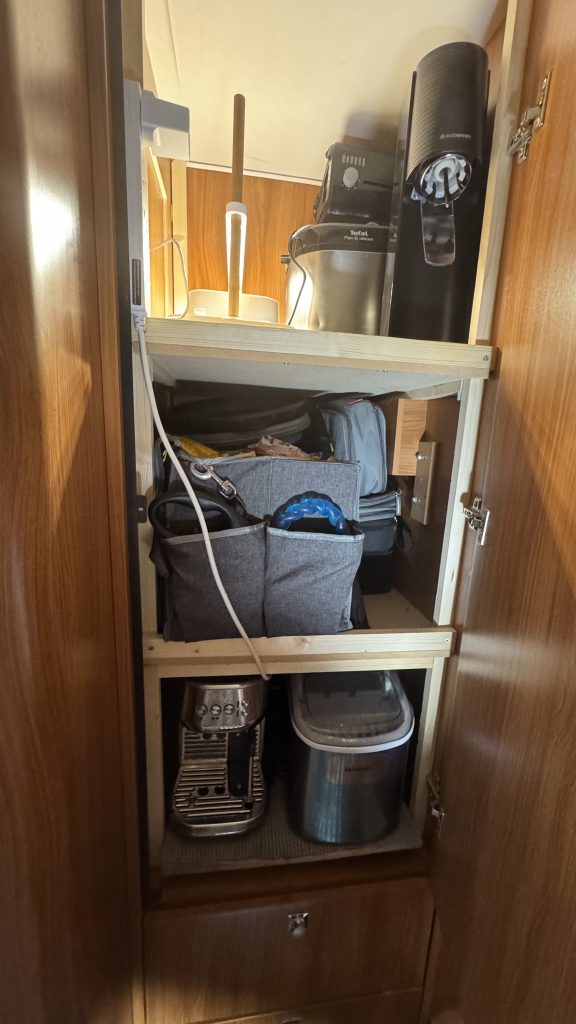
We’re not short on culinary kit. A wardrobe was converted into a custom home for the Sage Bambino Pro coffee machine and an ice maker — both on slide-out shelves. Add an Instant Pot Duo, an electric skillet, and the three-ring gas hob, and we can cook almost anything.
For entertainment, we’ve got two TVs: one 12V (runs straight from DC) and one AC smart TV that can sip power from an EcoFlow River 2 power station. The River 2 also has pass-through capability, so again, it’s not just backup but integration.
Why all this matters
It’s easy for this to sound like geekery, but that’s not the point. These systems aren’t gadgets for their own sake — they’re what make long-term travel liveable. They give us:
- Flexibility — wherever we site the van, whatever the hookup situation, whatever the weather.
- Resilience — if one system falters, another takes the load.
- Comfort — good sleep, good coffee, dry clothes, safe water.
Put all that together and it’s not just a motorhome. It’s a home — mobile, adaptable, and ready for whatever the road throws at us.

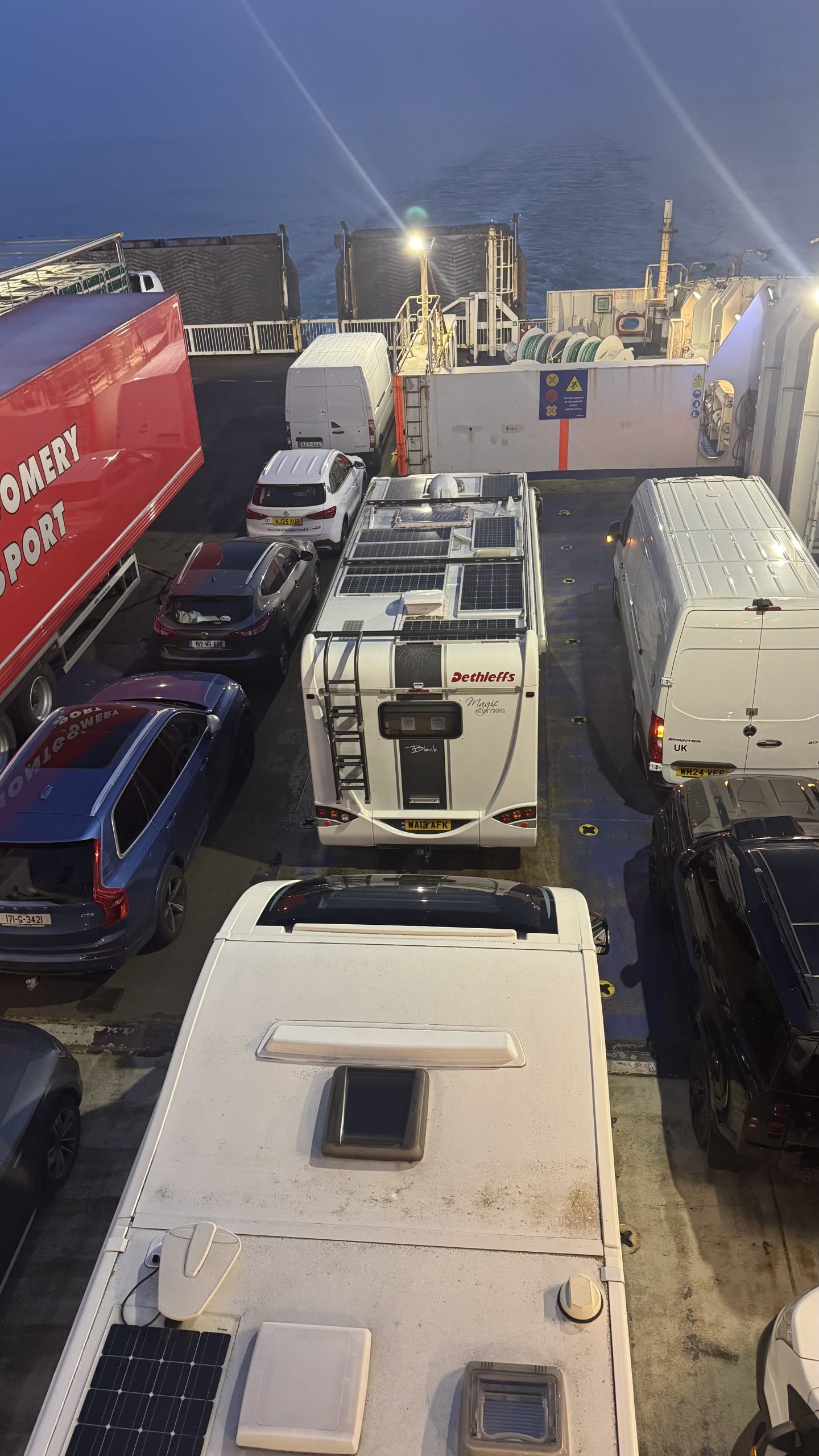


Great practical stuff. When are you installing the security drone on the roof we talked about over dinner one evening?
V