
Looking back at March 2026
Every month this page tries to do something slightly different from the rest of the magazine. The articles explore places, experiences and observations. The editor’s notebook steps back and asks a quieter question: what did we actually learn from all of this?
Our Third Life is not a travel project. Travel simply happens to be the medium we are using. The idea itself is broader than that and certainly not limited to people who have retired. Childhood is the first life. The working years are the second. The third is everything that follows — the portion of life where time becomes visible and the question changes from What must I do? to What is worth doing?
This month in Ohrid, several themes kept appearing in different guises.
The first was time.
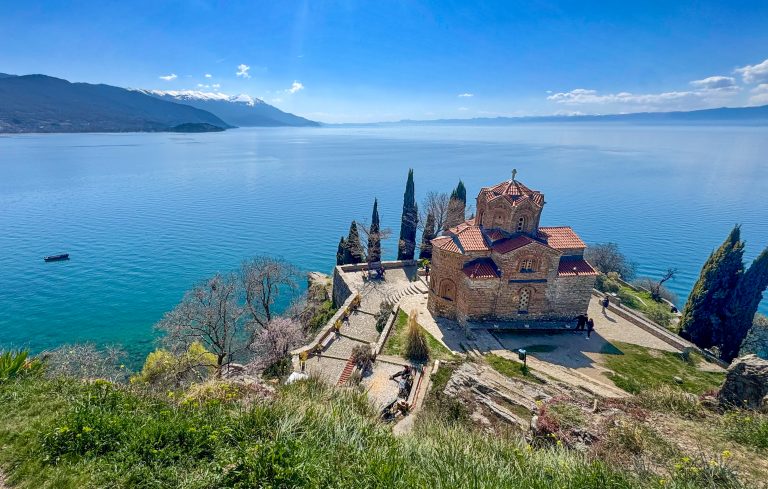
Lake Ohrid is over a million years old. To us that is almost incomprehensible. Civilisations have arrived, flourished, fought, prayed, traded and disappeared around its shores. Illyrian tribes built their early fortifications here. Philip II strengthened them. Romans, Byzantines and Slavs each left their own layer. Samuel of Bulgaria turned the city into the centre of an empire for a time. Saints Kliment and Naum helped shape a written language that still defines much of the Slavic world.
Standing beside the lake today, those human chapters feel monumental. To the lake they are brief interruptions.
That perspective has a calming effect. Modern life has a tendency to treat everything as urgent, permanent and existential. Yet most of what concerns us will barely leave a ripple in the deeper story of the world. Seen against geological time, even our longest arguments look rather temporary.
That is not depressing. It is oddly liberating.
Another theme that surfaced this month was how humans organise themselves, even in the most temporary of environments.
The sociology of campsites is a curious thing. Motorhomes arrive from dozens of countries, stay for a few nights or a few months, and then disperse again across the continent. Yet within days a quiet structure appears. Certain vehicles carry status. Certain behaviours signal belonging. Certain conversations repeat themselves almost word for word between strangers who may never meet again. Temporary neighbours form small societies remarkably quickly. It is a reminder that humans carry their social instincts everywhere. Even when we think we are escaping systems, we quietly rebuild them.
A third lesson arrived in a less philosophical way.
Technology, as it turns out, is excellent right up to the moment it isn’t.
The electrical fire in our auxiliary power system was an abrupt reminder that the systems we build to give us independence can also create new dependencies. One moment we had what felt like an unlimited supply of electricity. The next we were back to something closer to the ordinary rhythms of campsite life: managing amps, switching appliances to gas, and realising that we are not vulnerable, we have just lost our luxury autonomy.
It felt, briefly, like losing a superpower.
Yet there was something instructive in that loss. The purpose of systems is not to eliminate friction entirely, but to create resilience when friction inevitably appears. In that sense, the real system is not the technology itself but the thinking behind it.
Finally, this month reinforced something that sits quietly at the heart of the Third Life idea.
Attention.
Living beside the lake has slowed the pace of observation. You start noticing cloud boundaries forming over the Albanian mountains. The subtle shift in the lake surface between morning calm and afternoon chop. The way a dog reads a landscape entirely through scent rather than sight.
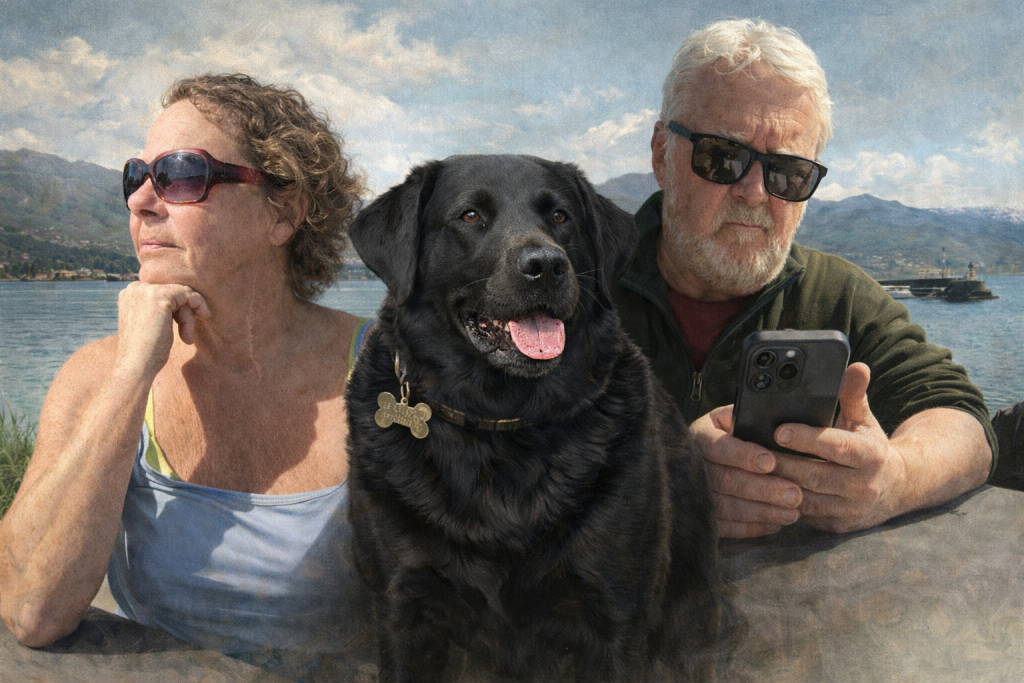
Scylla’s world, as we have been reminded repeatedly, is lived almost entirely in the present moment. Humans rarely manage that trick. Our attention is usually divided between what has already happened and what might happen next.
The Third Life, perhaps, is an attempt to reclaim a little of that lost attentiveness. Not in the sense of abandoning planning or responsibility, but in remembering that life is actually happening now, not at some later point when conditions are perfect.
This magazine records the places we visit, the food we cook, the systems we experiment with, and the small societies we encounter along the way. But the deeper purpose is simpler than that. It is an attempt to understand how to live well in the time that remains.
Lake Ohrid has been quietly doing its own version of that for over a million years. We are just passing through.