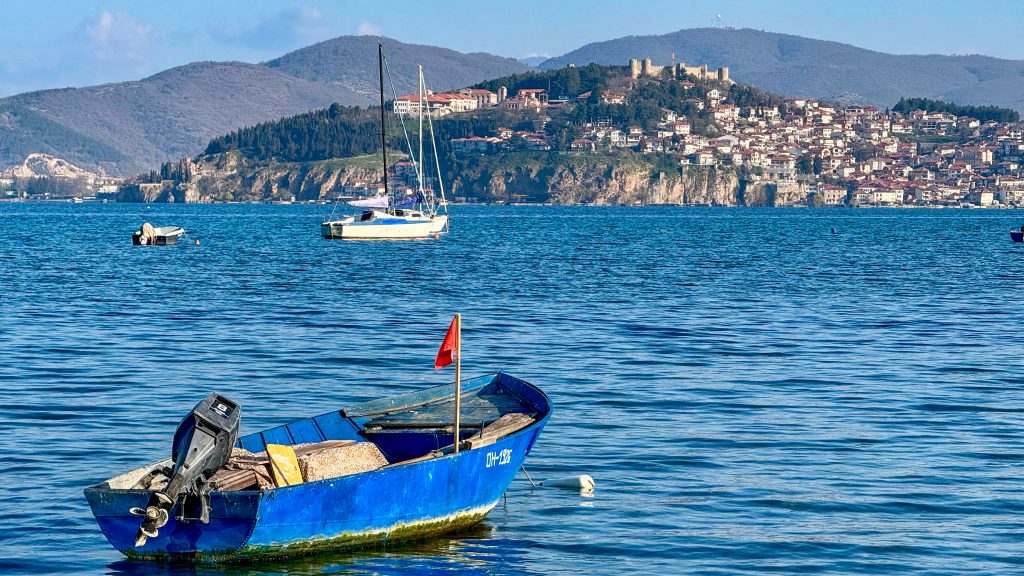

Early morning on the lakeside promenade is when Ohrid feels most honest. The cafés are still closed, fishermen check their boats, and the water lies almost perfectly still — the kind of calm surface that turns the lake into a mirror.
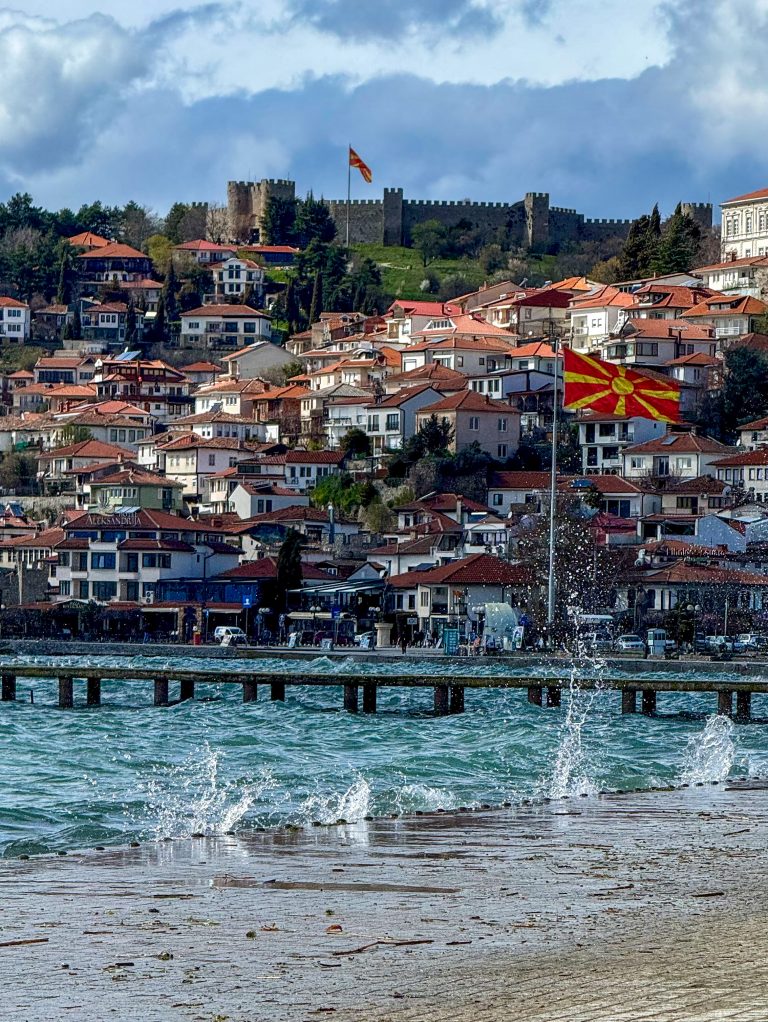
Behind the shoreline the town rises in layers: terracotta roofs, pale stone churches, and above them the long defensive walls tracing the ridge above the lake. It looks picturesque enough — the sort of view that ends up on postcards — yet the longer you spend here the harder it becomes to see Ohrid as merely scenic. Because almost everywhere you walk in this town, you are stepping through the remains of something older.
The streets beneath your feet sit on the foundations of earlier settlements. Churches were built over earlier buildings. The fortress above the town stands where defensive walls have existed in one form or another for more than two thousand years. And all of it sits beside a lake whose own story stretches far deeper than the towns that have appeared along its shores.
Ohrid has always been a place where different worlds overlap. In antiquity it was known by another name entirely.
Lychnidos — The “City of Light”
Ancient sources refer to the settlement here as Lychnidos, a name usually translated as “the city of light.” Greek and Roman historians mention the town, showing it was there well before the Roman period.
Long before imperial roads or medieval churches appeared here, communities were living around the lake’s shores. Greek and Roman writers later grouped many of these peoples under the broad label Illyrians, though the term itself was largely an external description rather than a shared ethnic identity. Around Lake Ohrid scholars associate the region particularly with tribes such as the Dassaretii, while earlier traditions refer to groups like the Enchelei.
These communities lived in fortified hill settlements and lakeside villages, cultivating the valleys and controlling the routes that led through the mountains toward the Adriatic coast.
Archaeology shows that human life around the lake stretches back thousands of years. Excavations have uncovered the remains of prehistoric lakeside dwellings built on wooden platforms above the water. A reconstruction of one such settlement can be seen today at the Bay of Bones Museum.
Standing beside the water this morning, watching fishermen push their boats into the lake, it is easy to imagine how life here has always revolved around the same essentials: water, fish, transport, and a natural meeting point between mountain valleys. Those same geographical advantages would later attract far larger powers.
Macedonian horizons
Climb through Ohrid’s narrow streets toward the ridge above the town and the view slowly opens out. From the walls the entire basin of Lake Ohrid spreads beneath you. The strategic logic becomes obvious.
By the 4th century BC, the region had come under the influence of the Macedonian kingdom ruled by Philip II of Macedon, father of Alexander the Great. During this Hellenistic period fortifications on the ridge overlooking the settlement were strengthened as part of wider efforts to secure the corridors linking the Adriatic coast with the interior Balkans. The defensive complex visible today is known as Samuel’s Fortress, although much of the surviving structure reflects later medieval reconstruction.
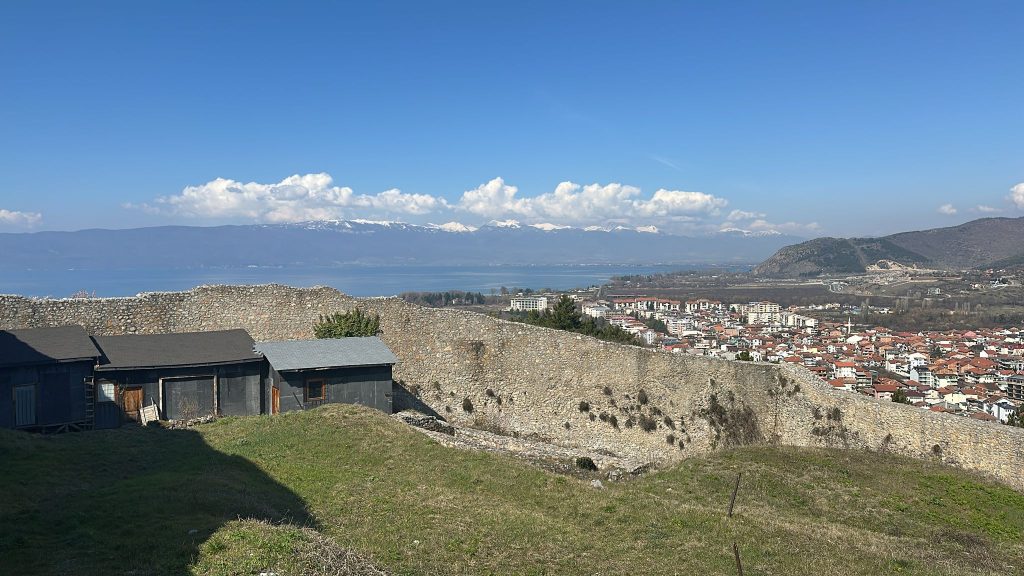
Still, the location explains everything. From this height every movement across the basin would once have been visible. Crossroads rarely stay quiet forever.
Rome and the imperial road
When Rome expanded into the Balkans, Lychnidos became part of a much wider system. Just beyond the lake basin ran the Via Egnatia, one of the great highways of the Roman world. This route connected Adriatic ports with major cities including Thessaloniki and ultimately Constantinople.
For travellers moving between western Europe and the eastern Mediterranean, this road was essential.
Imagine Lychnidos during the Roman era. A merchant caravan arrives dusty from the western mountains, its mules carrying amphorae of oil and wine bound for markets further east. Travellers pause beside the lake to water their animals while an imperial courier prepares to continue along the Via Egnatia. Nearby, a fisherman repairs his nets — a task that has likely been repeated on this shoreline for thousands of years.
Roman towns had a particular rhythm: paved streets, public baths, administrative buildings and the steady order of imperial administration. For several centuries Lychnidos existed comfortably within that world. Then, in 518 CE, a powerful earthquake devastated much of the settlement. Life continued, but the Roman landscape of the Balkans began gradually to change.
Slavic migrations
Between the 6th and 7th centuries Slavic-speaking communities migrated into much of the Balkan peninsula. These groups were not a single tribe but a collection of populations who gradually settled across the region over several generations. Their arrival coincided with a period of political instability as Byzantine authority weakened in parts of the Balkans.
Over time these newcomers interacted with the existing inhabitants of the region — populations whose cultural roots included earlier Illyrian, Roman and Byzantine traditions. Through centuries of migration, settlement and cultural blending, new Slavic-speaking societies appeared.
Within this evolving landscape the settlement took on its modern name. Lychnidos became Ohrid.
Samuel’s Ohrid
Standing on the fortress walls today, the lake stretches out beneath you in an almost improbable calm. A thousand years ago this quiet landscape formed the centre of a very different political world.
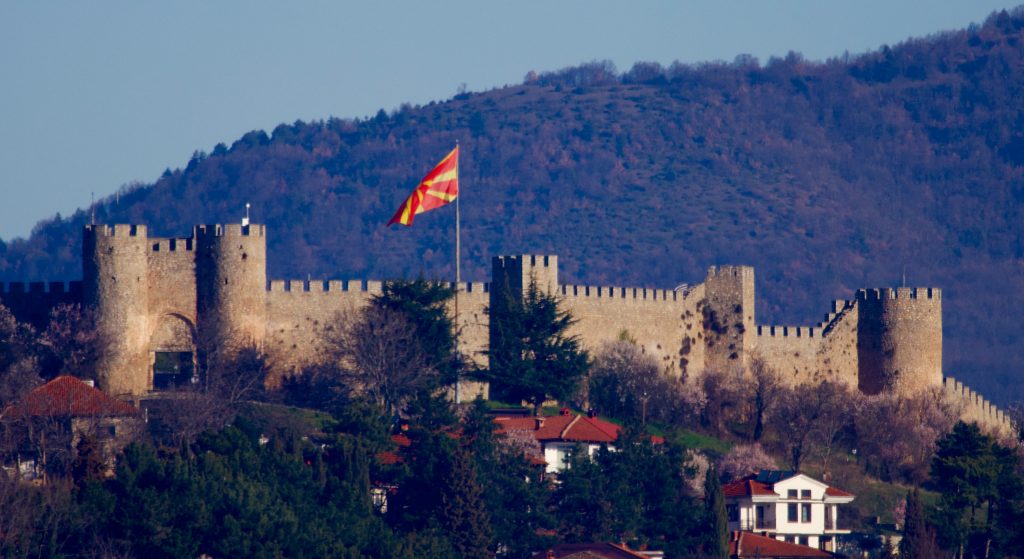
During the reign of Samuel of Bulgaria in the late 10th century, Ohrid became one of the principal centres of the First Bulgarian Empire. Samuel strengthened the fortress and established the city as an important political and ecclesiastical centre of his realm. For a period Ohrid served as the seat of the Bulgarian Patriarchate, reinforcing its significance as a religious and administrative centre. Much of the defensive structure visible today reflects this medieval phase of expansion.
A city of learning
Ohrid’s most enduring influence, however, came not from warfare but from scholarship. In the late 9th century Saint Clement of Ohrid and Saint Naum of Ohrid established an important centre of learning here. Both were disciples of the missionaries Saints Cyril and Methodius, who had earlier developed the Glagolitic alphabet, the first writing system designed specifically for Slavic languages.
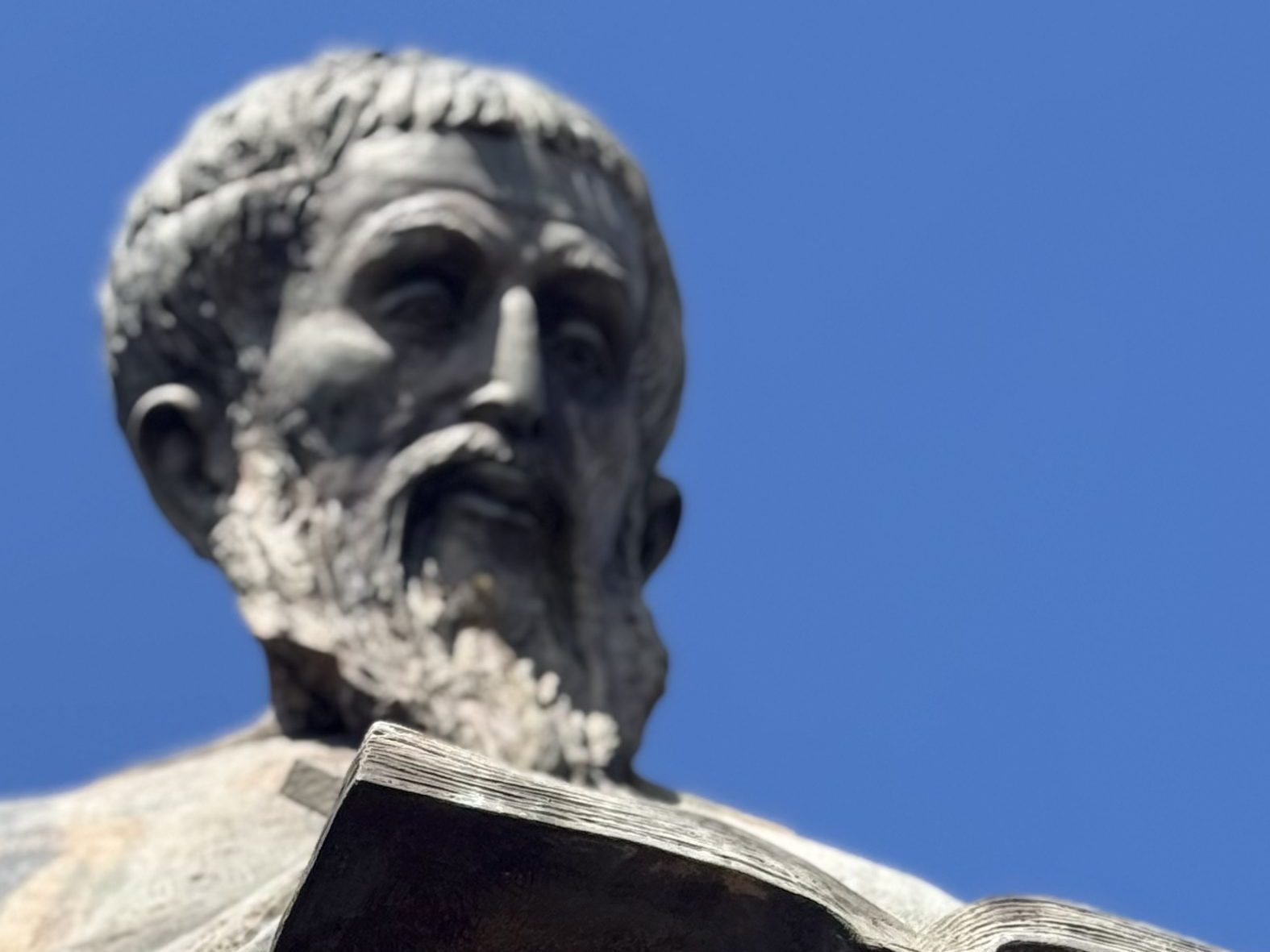
At Ohrid Clement and his students helped develop the literary tradition that eventually produced the Cyrillic alphabet, adapting Greek letter forms to represent Slavic sounds. The Ohrid Literary School became one of the most influential centres of Slavic education in the medieval world, spreading literacy and religious texts across much of southeastern Europe.
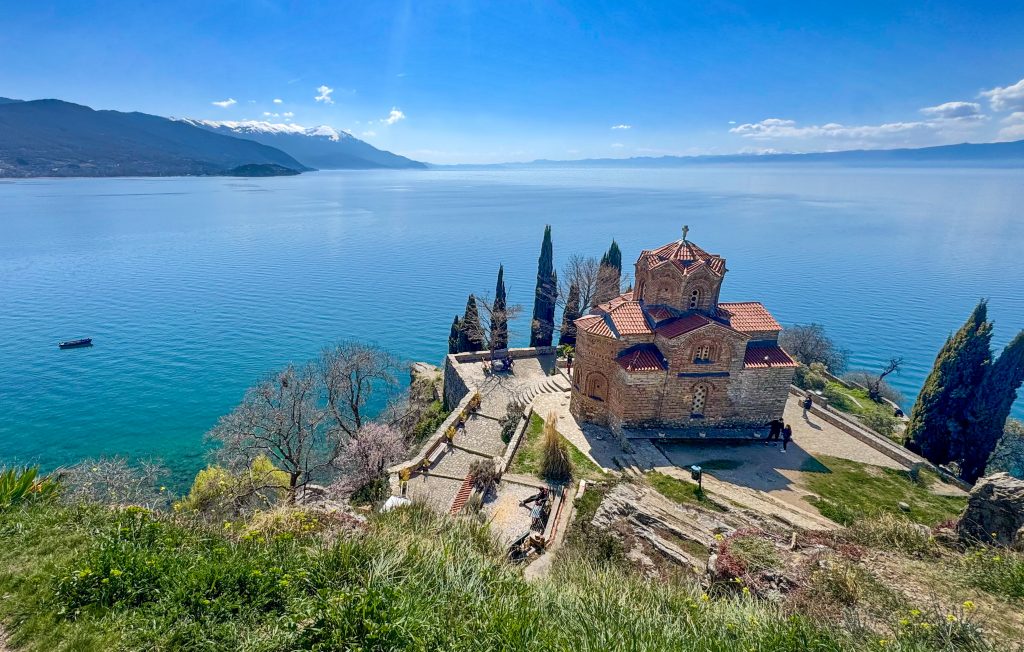
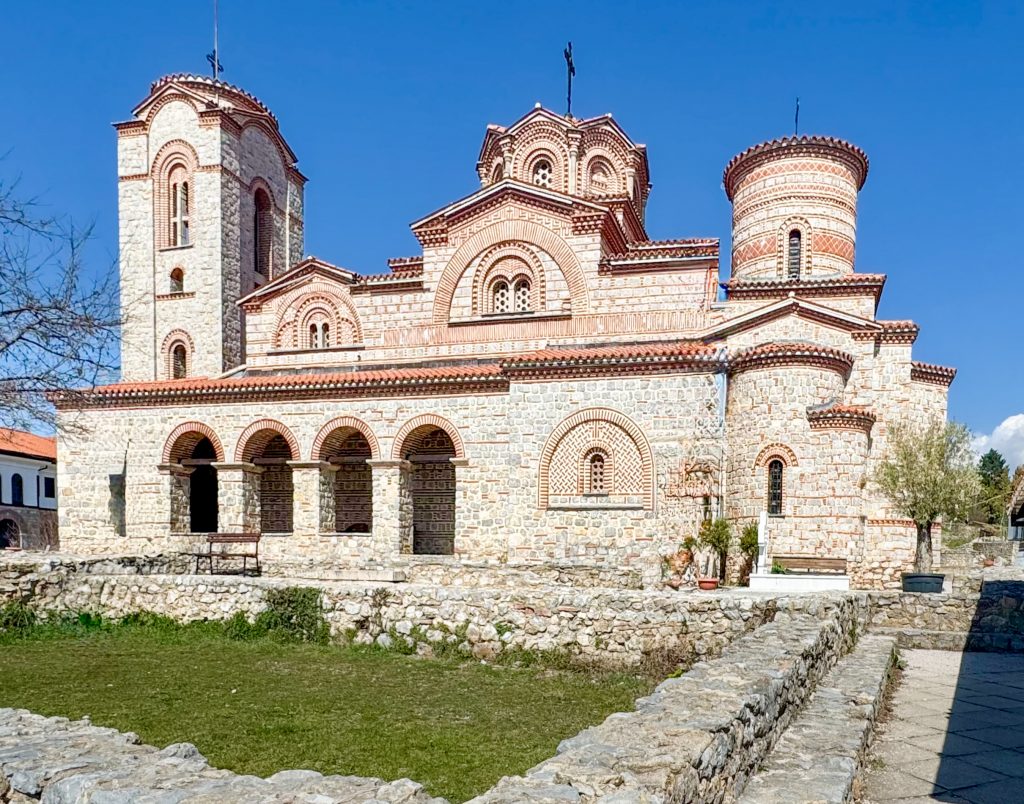
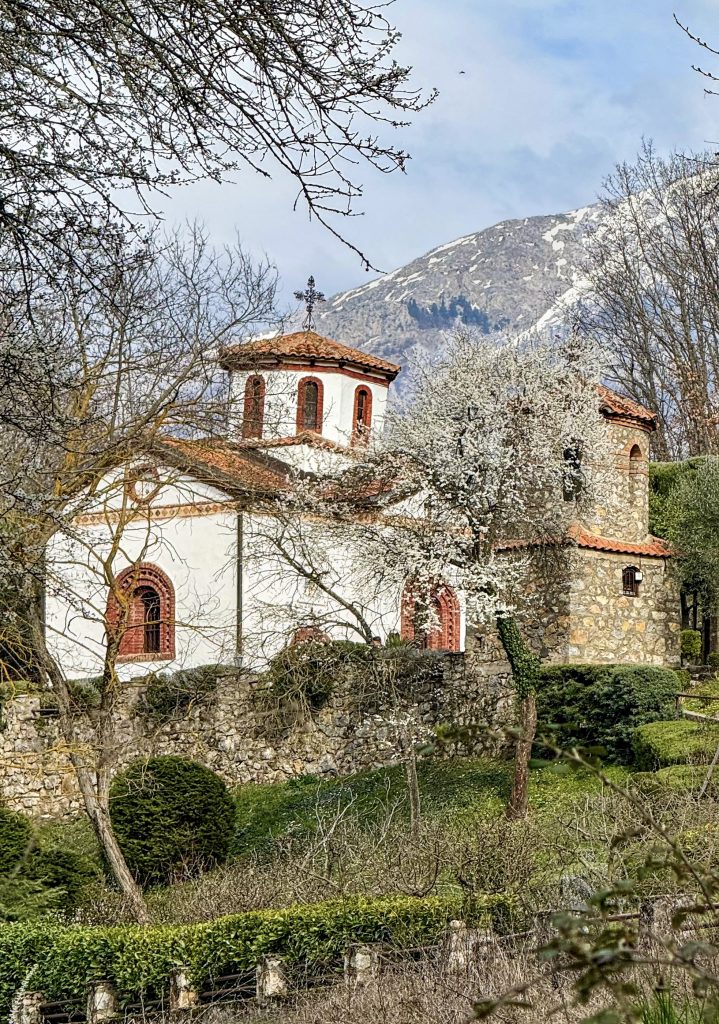
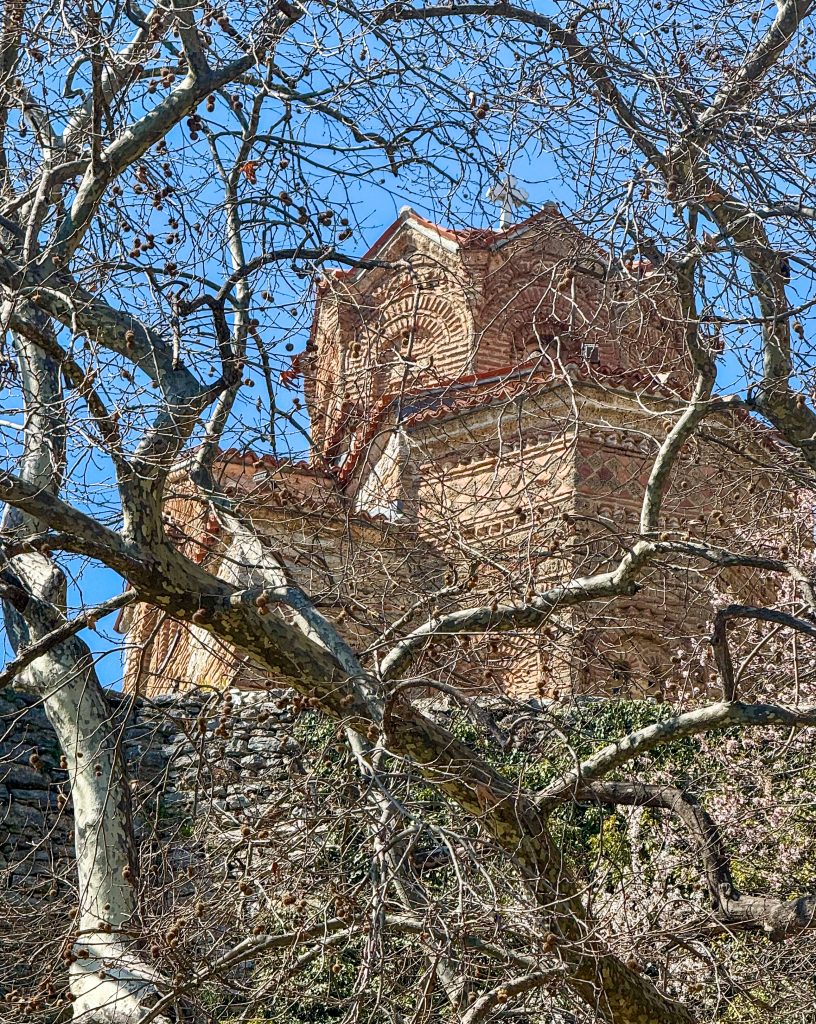
Churches multiplied across the hillsides surrounding the lake. Local tradition claims that there were once 365 churches in Ohrid — one for every day of the year. Whether literal or symbolic, the claim reflects the scale of Ohrid’s influence as a centre of Orthodox learning and spirituality.
The lake that remains
Today Ohrid feels quieter than its history might suggest.
Orthodox monasteries stand beside Ottoman-era houses and modern cafés along the lakeside promenade. Around sixty percent of the population identifies as Orthodox Christian, alongside Muslim and Catholic communities — reminders of the many cultures that have shaped the town.
Yet the most constant presence is the lake itself. The same water that sustained prehistoric settlements still laps against the same shoreline. Fishermen still launch their boats at dawn.
Civilisations have risen around this water, built fortresses above it, written alphabets beside it and prayed along its shores. To us those histories feel ancient. To the lake, they are recent arrivals.