

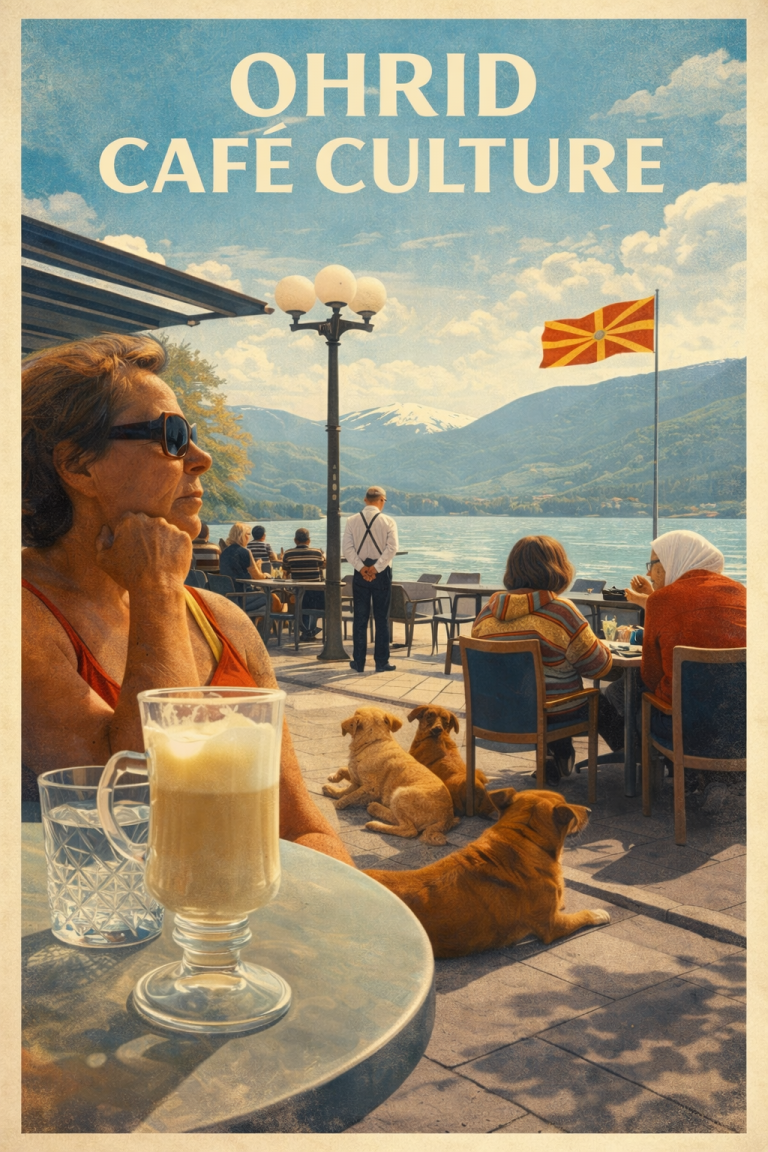
The first thing you notice sitting beside the lake is the sound. Spoons touching porcelain cups. Chairs scraping gently across stone. A waiter placing a small glass of water beside an espresso before moving quietly to the next table. Nothing hurried, nothing theatrical. Just the steady rhythm of people sitting, drinking coffee, and watching the day unfold. At first it simply feels pleasant. After a few weeks you begin to realise it is something more structured than that.
In Britain coffee is often something collected on the way to somewhere else. A paper cup in the hand, swallowed quickly between errands or appointments. Here the experience works differently. Coffee is something you sit down for. Tables fill steadily from mid-morning onwards and remain busy through the day. A single espresso may sit in front of someone for twenty minutes while conversation wanders comfortably across the table. The ‘coffee’ often lasts longer than the drink itself.
It took us a few weeks to realise that the cafés were not simply places to drink coffee. They were where the day itself slowed down. The rhythm of the town reveals itself most clearly around café tables.
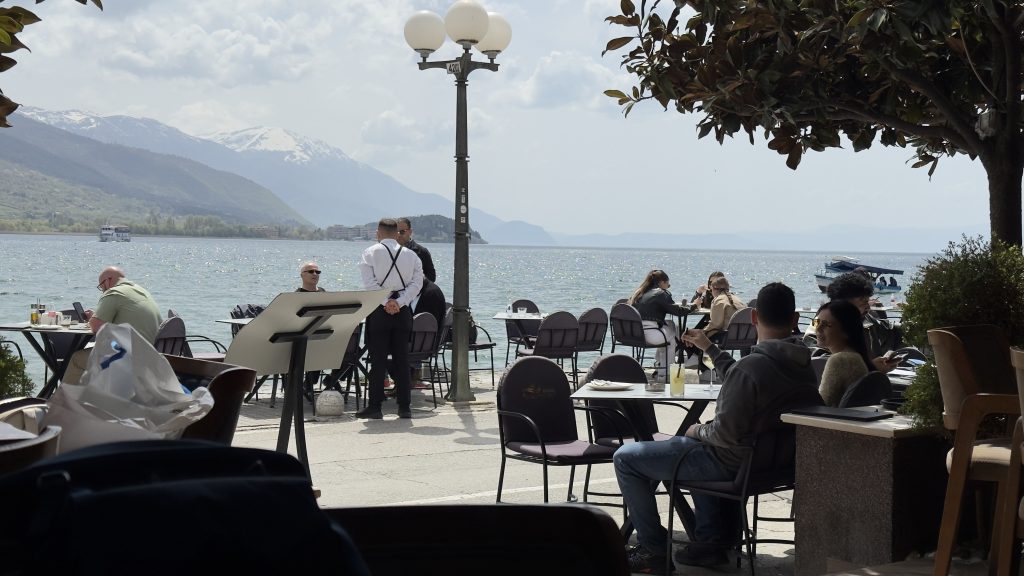
Return often enough and patterns begin to appear. Some cafés are consistently full regardless of whether they occupy the most obvious lakeside or city-centre locations. Younger people seem particularly drawn to certain places, while in the market quarter older men gather at tables to talk, gesture, and occasionally put the world to rights over a small cup of coffee. Some people sit alone watching the street, but most tables host conversation.
One thing you see far less of here is laptops. In northern Europe café tables often double as temporary offices. Here they remain mostly what they were designed to be: places to sit, talk and pass time.
At our usual lakeside café, the staff now greet us with a handshake when we arrive. Our lattes appear a little hotter than the local norm because they remember our preference. A glass of water arrives automatically beside the coffee, something that seems almost universal here. None of this is dramatic, but it marks a small shift. We have moved from customers to part of the background rhythm.
Service itself reflects that rhythm. Coffee does not always arrive quickly. At first that can feel like poor service to someone used to northern European efficiency. After a while it becomes clear that it is simply service calibrated to the pace of the room. Nobody is in a hurry to finish their coffee, so nobody seems particularly concerned about how quickly it arrives.
Yet cafés are only part of Ohrid’s coffee culture.
Another layer sits quietly on street corners in the form of coffee vending machines. They are everywhere — small metal boxes producing a cup of coffee for around thirty Macedonian denars, about forty pence. If you want caffeine quickly, the machine will provide it without ceremony. What is interesting is what happens next.
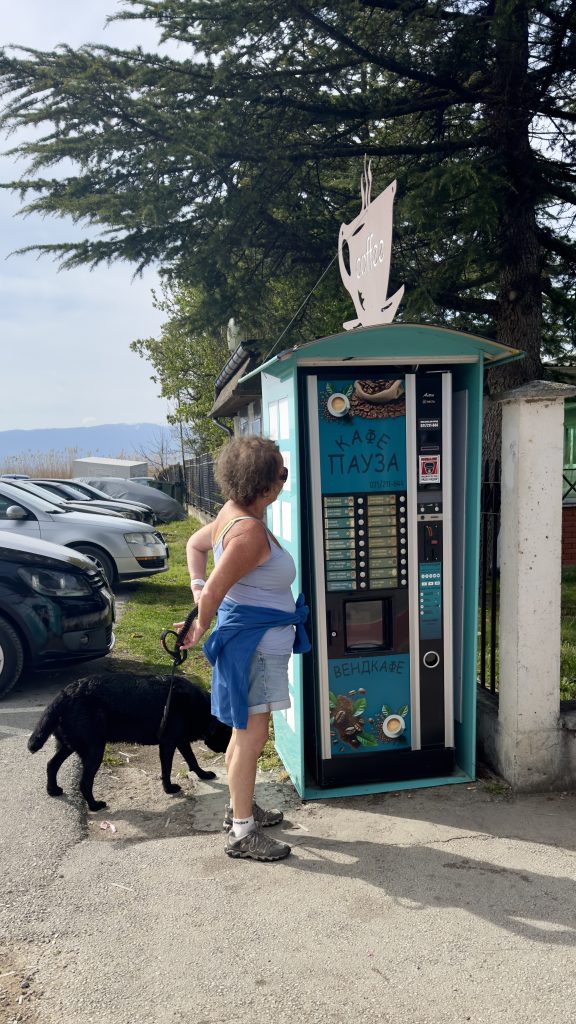
Groups of young teenagers often arrive on roller blades, feed coins into the machine and then drift across to the seating along the lakeside promenade. Coffee in hand, they form their own small circles of conversation before skating off again. Others do something similar in the green belt nearby. A drink from the machine becomes the centre of a temporary gathering. For a few minutes a small outdoor café appears, then dissolves again.
The machines are used by all kinds of people — workers passing by, older locals, teenagers meeting friends — but the price makes them particularly accessible. Coffee stripped back to its simplest form: quick, cheap, and available everywhere. And yet the social instinct remains.
What sits underneath all of this, I suspect, is a different relationship with time. In much of northern Europe daily life tends to run on efficiency. Coffee fits between other activities — something taken quickly before moving on to the next task. In the Balkans the rhythm feels slower and more deliberate. Time is not always something to optimise; sometimes it is simply something to inhabit. The café becomes the natural setting for that rhythm.
People sit, talk, watch the street and allow the day to unfold without hurry. The machines provide the caffeine when speed is needed. The cafés provide the space when time is available.
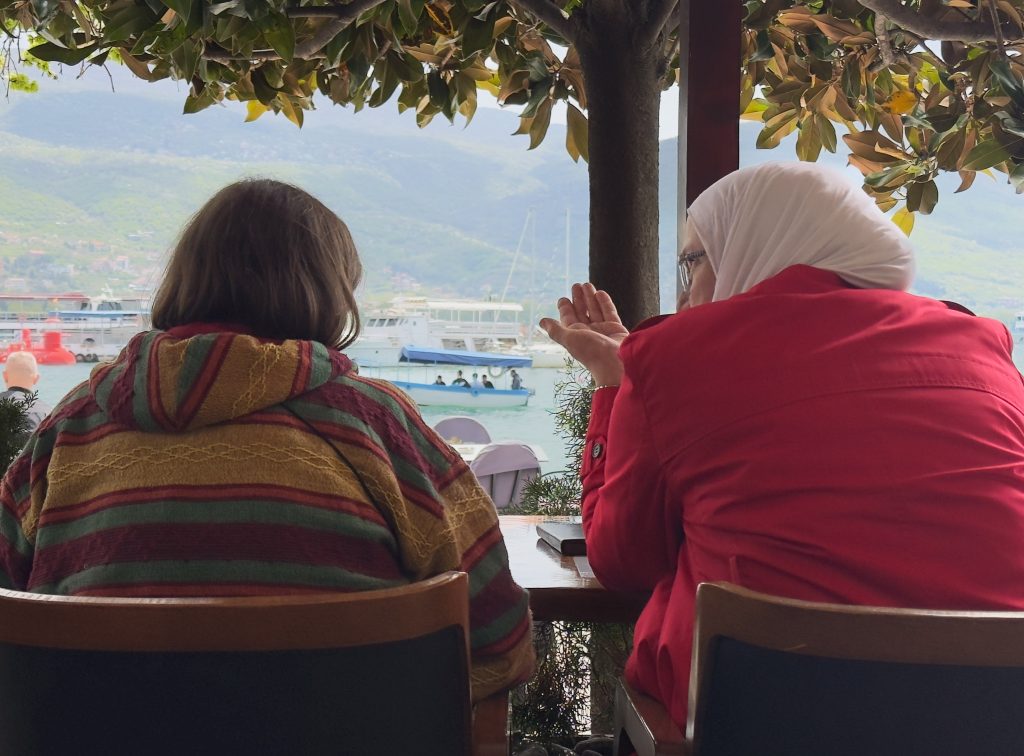
You only notice these patterns once you have spent enough time in one place to stop looking for the next thing. Travelling introduces you to places. Dwelling long enough allows you to see how they live. Here in Ohrid, coffee turns out to be one of the clearest windows into that rhythm.