

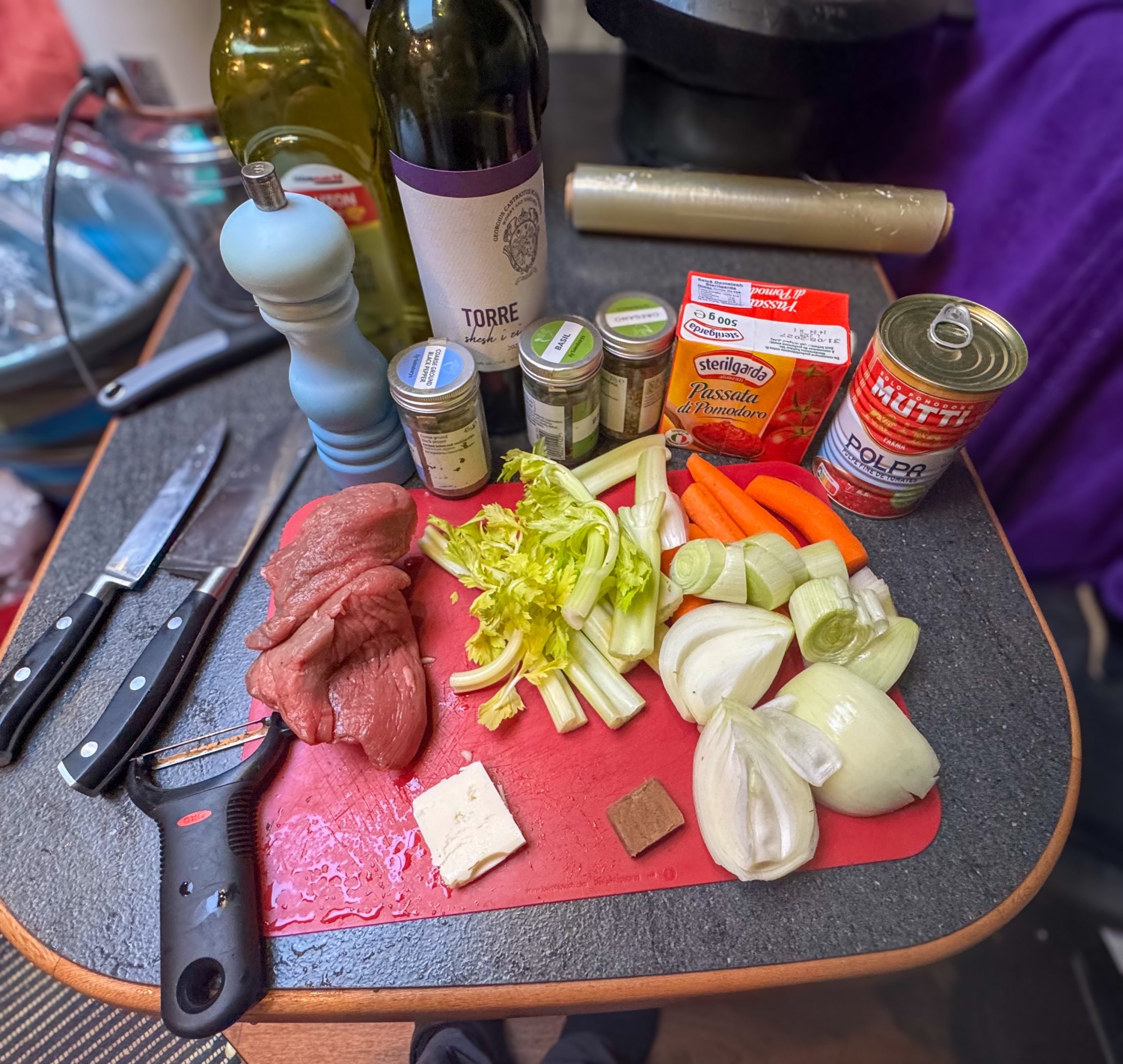
This is not a regional ragù, and it isn’t trying to be. It’s the version that’s emerged from cooking the same dish repeatedly: in a small kitchen, with limited kit, and enough time to let it develop properly.
It rewards patience, forgives variation, and improves when it isn’t rushed — which makes it particularly well suited to life on the road.
I never use minced meat. Ever.
Equipment
- Instant Pot Duo (used for sautéing and slow cooking)
- Food chopper (Kenwood or equivalent)
- Small saucepan
Ingredients
- 2 large onions (red or white), or 4 shallots
- 4 carrots
- 4 sticks of celery (including the central leaves)
- Beef joint, sliced into medium pieces, pre-cured with salt and black pepper
- Tomato purée
- Tomato passata
- 1 tin chopped tomatoes
(or fresh tomatoes if available — firm, fleshy varieties, skinned, cored, deseeded, and roughly chopped) - Olive oil and butter
- Salt and black pepper
- Herbs: a generous pinch each of oregano and basil
(Herbes de Provence works well too) - Red wine (good enough to drink)
- 1 beef stock cube
- 200 ml water
Method
1. Brown the meat
Set the Instant Pot to Sauté (High). Brown the beef in batches, without crowding the pot. Remove and set aside.
2. Build the sofrito
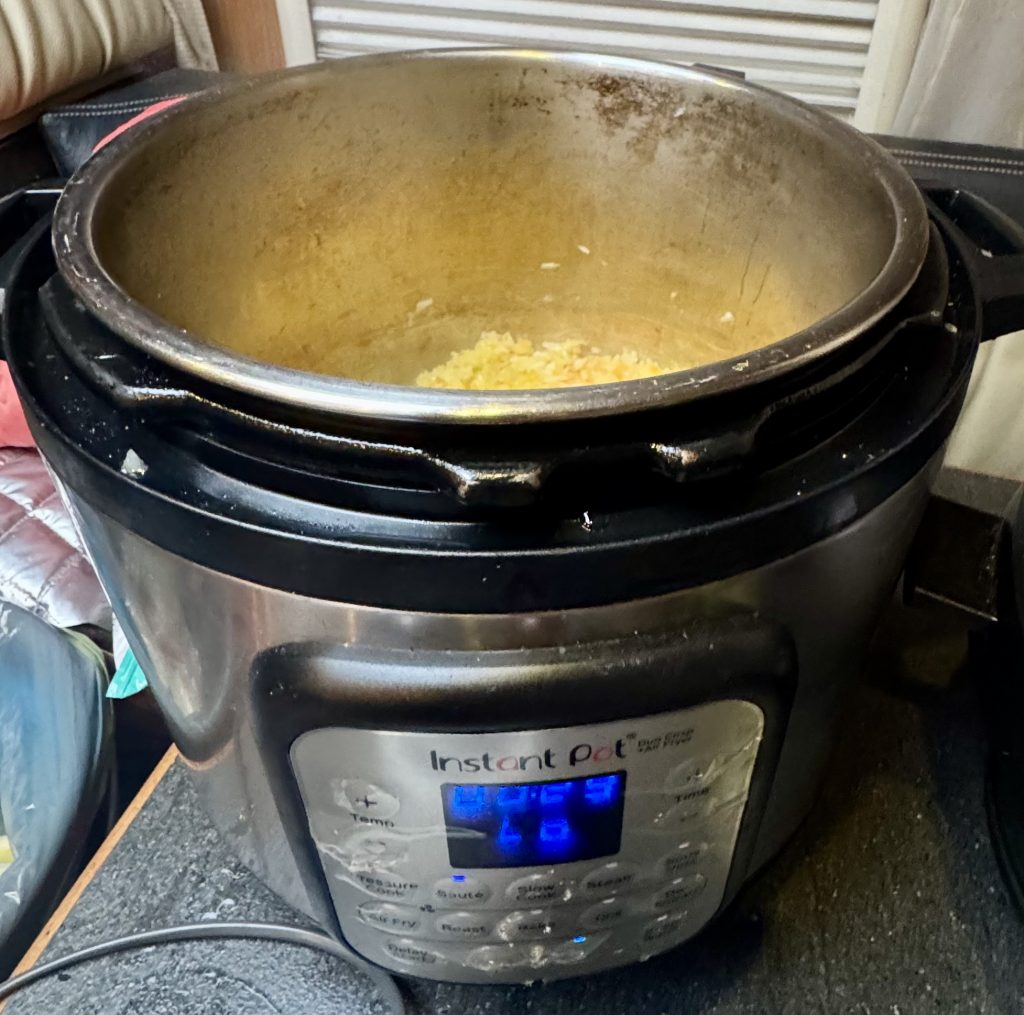
Finely chop the onions, carrots, and celery. Add a small amount of olive oil and butter to the pot and gently sauté the vegetables, seasoning with salt and pepper.
Cook slowly until the onions are translucent and soft — not browned. This stage matters.
3. Deglaze and reduce
Add the red wine, scraping up any residue from the base of the pot. Allow the alcohol to cook off and reduce the liquid by roughly half.
4. Assemble the sauce
Add the passata, tomato purée, chopped tomatoes (or fresh), herbs, and the crumbled stock cube. Pour in the water and stir to combine.
5. Slow cook — properly
Return the beef to the pot.
Turn off Sauté and switch to Slow Cook (High).
Fit the pressure lid with the valve fully open — this is essential. You are slow-cooking, not pressure-cooking.
Cook for a minimum of 11 hours.
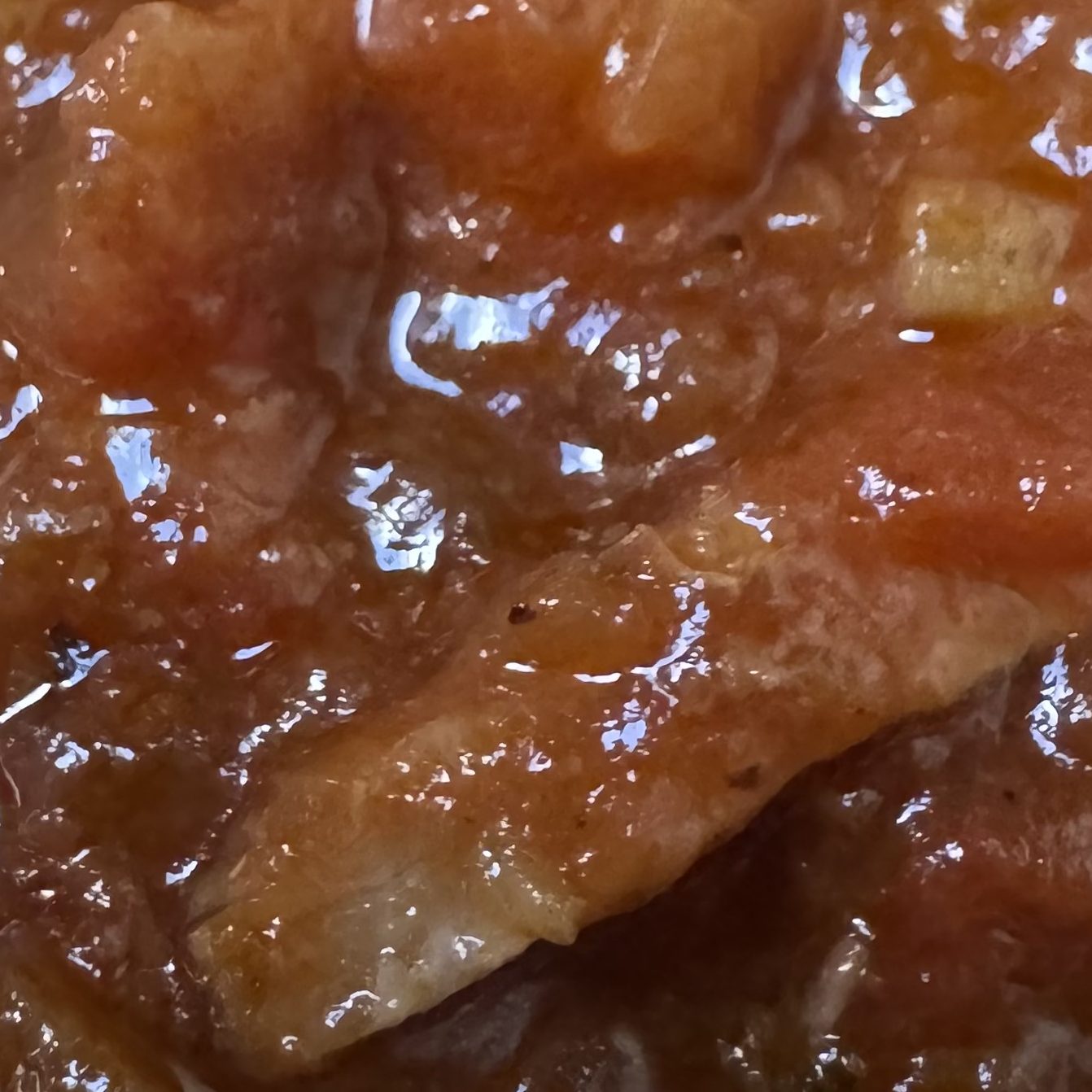
I check the ragù after the first hour, again at around eight hours, and finally at eleven. The meat should pull apart easily with a fork, and the sauce should be thick, dark, and cohesive.
Serving note (what it works with)
This ragù suits wide, robust pasta shapes that can carry weight:
- Tagliatelle
- Pappardelle
- Rigatoni
Use restraint with cheese. A little grated hard cheese is enough — this sauce doesn’t need rescuing.
Notes from the road
- This improves overnight and freezes well if you have the capacity.
- Quantities are deliberately flexible — this is a feel-based dish.
- Time is the key ingredient. If you rush it, it will let you know.
An editorial note
In Italy, pasta isn’t chosen for decoration. It’s chosen for suitability. This ragù only makes sense when paired with something that can stand up to it — something with width, texture, and grip.
Cooked this way, the dish stops being about authenticity and starts being about appropriateness. And once you begin cooking like that, it’s hard to unsee the logic elsewhere.