
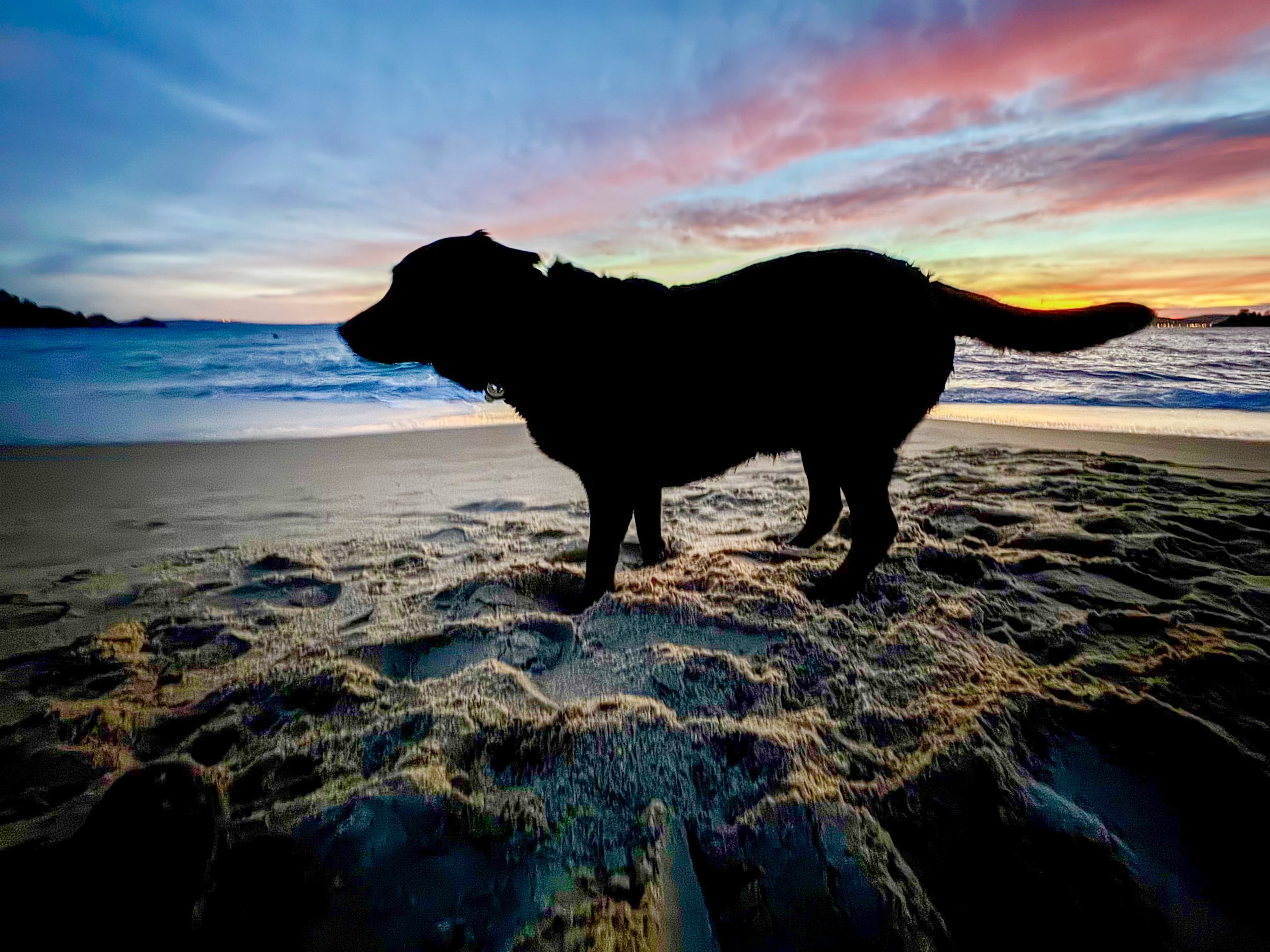
A dog’s view
My voice is sentient but not cartoon-like. I’m speaking from canine psychological and physiological perspectives.
What helps me on the road — and what you might not notice unless you slow down
I don’t think in words, but I do think. Mostly in patterns: pressure, movement, smell, sound, safety.
Living like we are — moving, staying, moving again — is not confusing for me. It’s only confusing if the signals don’t make sense. When they do, my body settles. When they don’t, it holds tension quietly. You don’t always see that straight away.
My nervous system notices before I do
Before my behaviour changes, my body does. Too much novelty without repetition raises my baseline alertness. I scan more. I rest less deeply. My muscles stay slightly braced even when I lie down.
France worked well for me because it repeated itself. Same walks. Similar smells. Predictable days. New places, yes — but arranged inside a familiar rhythm. That tells my nervous system it doesn’t need to stay on guard. A calm dog is not a passive dog.
A calm dog is a dog whose threat-detection system can stand down.
Movement is how I regulate
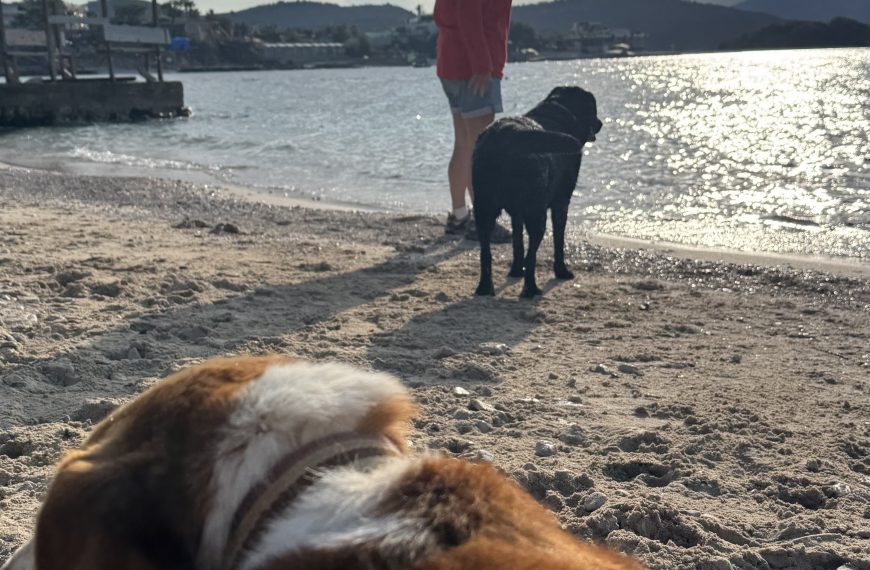
Walking isn’t just exercise. It’s information. Different surfaces tell my joints where they are. Sand makes me stabilise. Stone sharpens my placement. Grass lets me loosen again. Swimming unloads my joints and resets my breathing.
When I move like this regularly, my body trusts itself. When my body trusts itself, my mind follows. If you see me moving more economically, settling faster afterwards, sleeping deeply — that’s not tiredness. That’s integration.
Water changes my state
Cold water does something important to me. It’s immediate. Honest. I can’t overthink it. I enter, swim, exit, shake, and my system reorganises. After a swim, I don’t need to monitor as much. I’m quieter inside.
If you travel with a dog, notice what reliably lowers their arousal, not what excites them. Excitement looks good. Regulation lasts longer.
Small spaces can feel safe
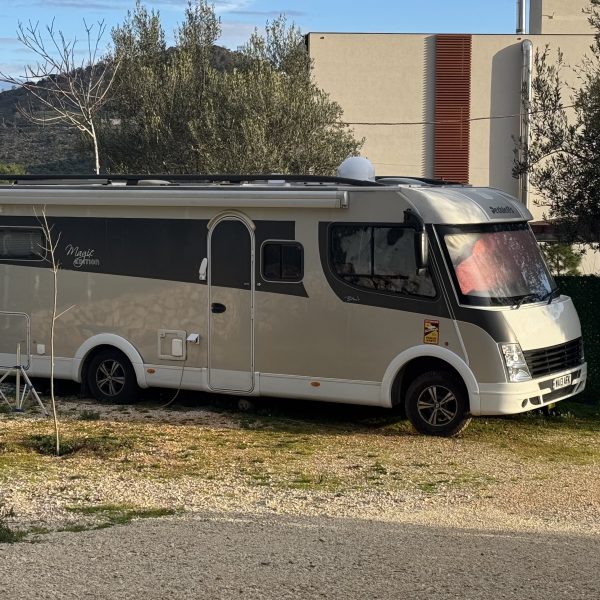
The motorhome is not big, but it is consistent. At first it smelled like movement and other places. Now it smells like us. That tells me where I belong. I don’t need to patrol it. I don’t need to check on you constantly. I can rest. Dogs don’t need space the way humans think they do. We need clarity — where we fit, what’s expected, when we can switch off.
Time matters more than place
I don’t read maps. I read transitions. Shoes on. Lead clipped. Certain tones of voice. The way the day slows in the evening. When these things happen in a familiar order, I relax into them — even if the view outside is new.
When timing becomes erratic, I stay alert longer than I should. Not anxious — just unfinished. Routine isn’t boring to me. It’s how I know the world is under control.
I sense change before you say it
Before we move on, I feel it. You pause differently. You check things twice. The rhythm tightens. I respond by watching more closely and staying nearer. That’s not worry — it’s preparation.
Healthy dogs don’t resist change. We orient to it. What helps is when you keep the anchors steady: walks, food cues, rest times. Change the place if you like. Keep the signals.
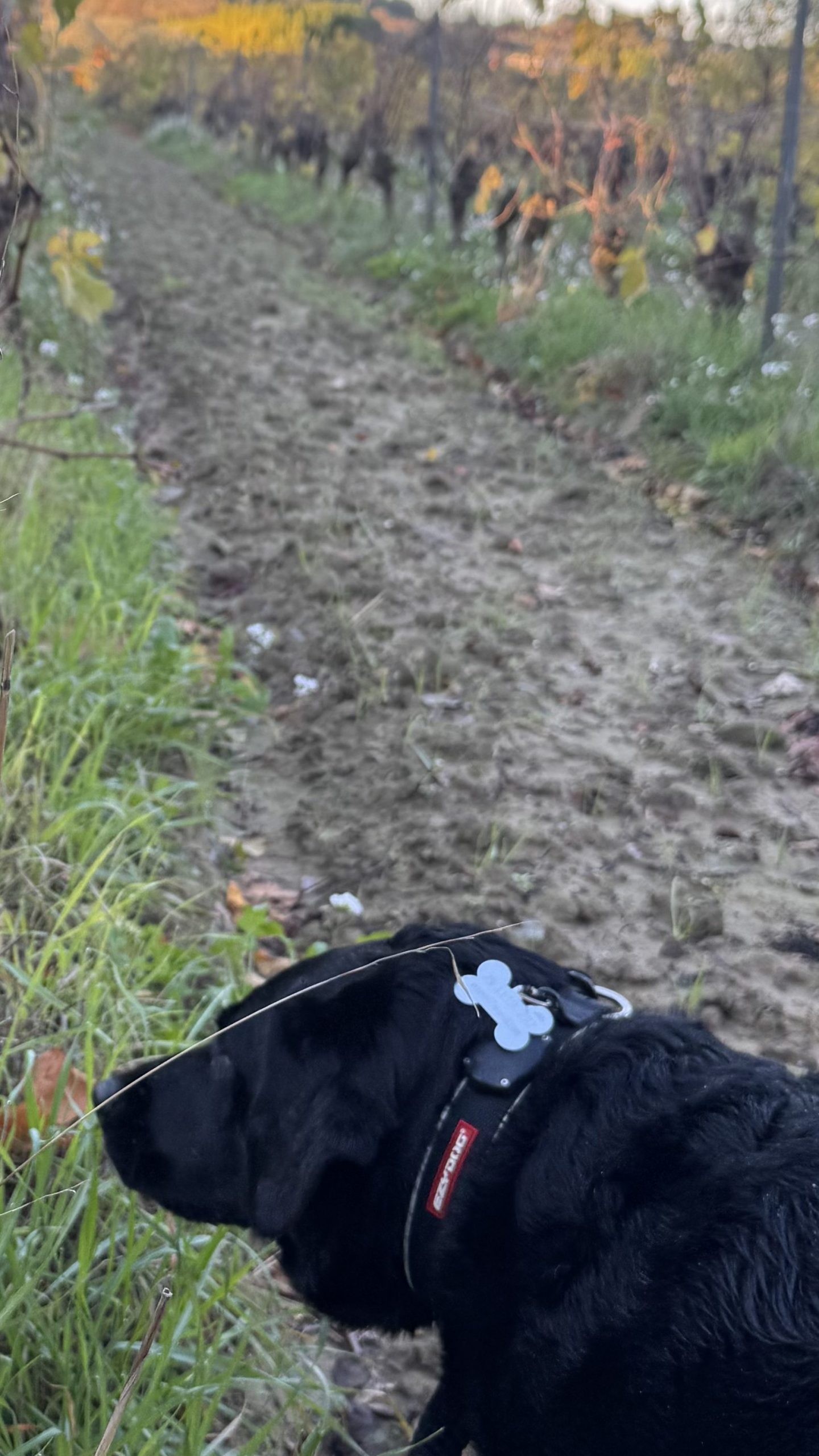
What I need you to notice
I won’t always tell you clearly when something is too much. I’ll still walk. I’ll still eat. I’ll still follow. But my rest will be lighter. My reactions sharper. My recovery slower. That’s when repetition, familiar movement, and calm presence matter more than novelty or stimulation.
You help me most when you:
- protect my rhythm
- vary terrain
- let me move properly
- give me time to settle fully
I don’t need entertainment. I need coherence.
What I’m learning
Living this way is teaching me — and you — the same thing.
Wellbeing doesn’t come from constant enrichment. It comes from a body that trusts the ground, a nervous system that knows when it’s safe, and people who pay attention without fuss. I’m not commenting on the journey. I’m showing you how it lands in a body.
If you’re willing to watch, that’s usually enough.
The human view
What we’re learning from Scylla — and how it’s changing what we do
Living closely with Scylla on the road has sharpened our attention because her responses keep adjusting our assumptions.
Two situations have prompted us to change how we support her: before transit, and when outdoor activity is restricted.
Before transit: using the anticipation, not fighting it
As we prepare to move on, Scylla’s alertness rises slightly. She watches more. She disengages more slowly. We don’t read that as anxiety — it looks more like orientation.
What we’ve started doing is giving that extra attentiveness somewhere to land. We now add low-key brain work before departure:
- scent-based searches
- problem-solving games
- short, focused interactions that reward attention rather than speed (training)
The change for us was realising she didn’t need more walking at this point — she needed mental completion. After exercising, playing tug, fetch or just running around, her body is tired but unless her brain is also tired, she doesn’t settle completely. With the balance right, she is content and shuts off – in a good way.
When outdoor activity is limited: finishing the day differently
In places where walking is more constrained, we’ve noticed that distance alone doesn’t predict how settled she is later.
So, we’ve experimented with structured play:
- brief tug games – it is just possible within the motorhome
- short, familiar fetch routines
- repetition rather than novelty – we have a training routine for every walk
What surprised us was how effective this was. It doesn’t exhaust her, but it seems to help her feel finished.
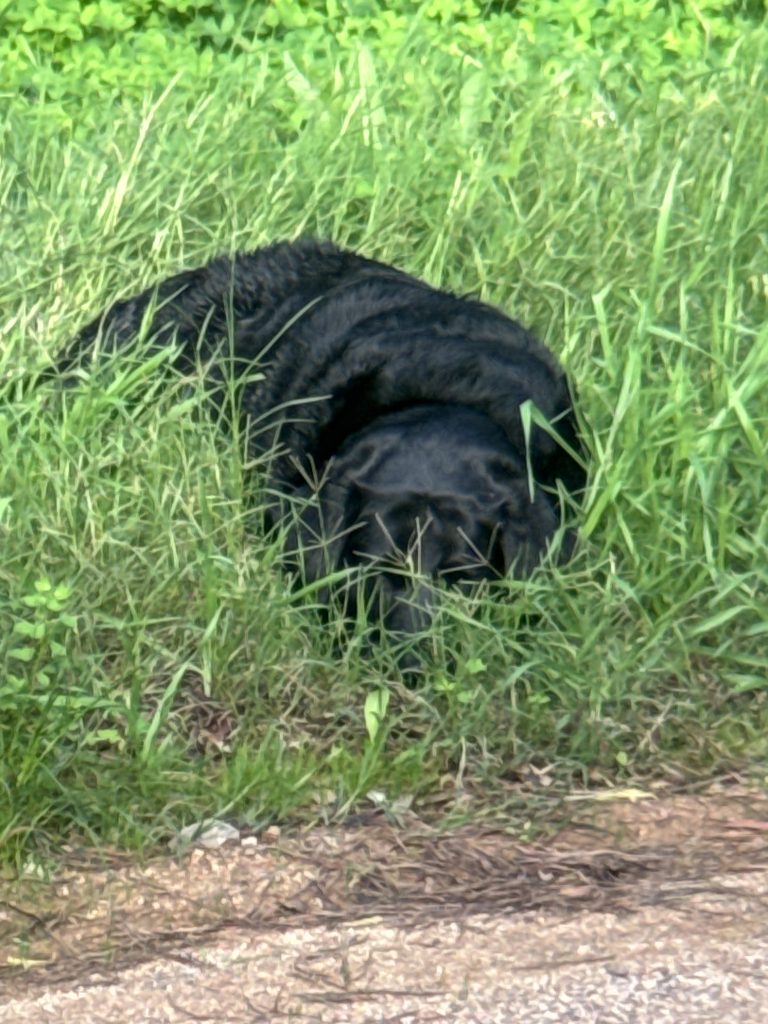
Keeping movement honest
Walking remains central, especially over varied surfaces. Where we can, and considering her dysplasia, we prioritise:
- terrain changes
- time to sniff
- letting pace fluctuate naturally
What we’ve learned is that movement organises her body, while thinking organises her mind. One without the other leaves something unresolved.
The signals we now watch more closely
We’ve stopped relying on behaviour alone and started noticing quieter indicators:
- how quickly she settles after activity
- the depth of her sleep
- the economy and ease of her movement
- how often she checks in unnecessarily
These shifts usually tell us when we’ve got the balance right — or when we need to adapt again.
The thread we keep pulling
We’re learning that Scylla doesn’t need constant stimulation, variety, or novelty.
She seems to respond best to:
- rhythm
- predictability
- meaningful mental engagement
- straightforward physical movement
None of this was obvious at the start. It’s emerged by watching what changes in her when we change what we do.